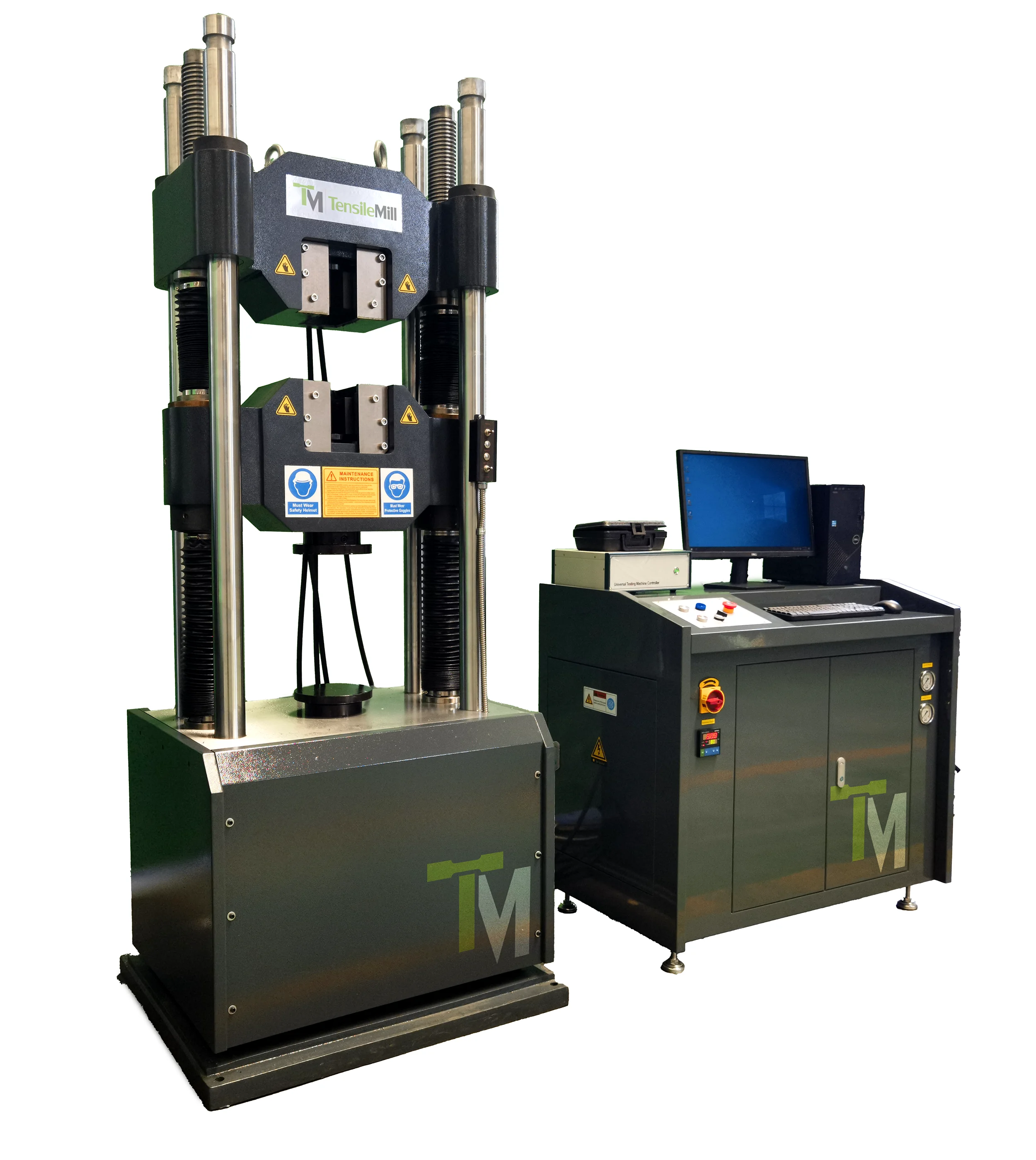
Are Training and Installation Mandatory for Class A, B, and C Tensile Testing Systems?
No. Training and installation are optional for our universal testing machines. Class A, B, and C systems ship with all required cabling and a step-by-step setup guide, so most labs complete installation independently.
A typical startup includes positioning the frame, making power and controller connections, attaching the load cell and any extensometer, installing the testing software, running the built-in self-check, confirming crosshead travel and safety circuits, and performing a trial test to validate data flow. The process is designed for technicians who may be new to UTMs, reducing ramp-up time without sacrificing measurement quality.
If you would like assistance, a qualified engineer can host a remote onboarding session to walk through connections, software configuration, grip selection, and your first live test. Onsite services can also be quoted on request. When your quality program calls for third-party verification, we can coordinate accredited calibration to ISO 7500-1 or ASTM E4 after the machine is operational.
If you would like to review capabilities by system class, you may explore specifications on the
Tensile Testing Equipment page.
Are Training and Installation Mandatory for Class A, B, and C Tensile Testing Systems?
No. Training and installation are optional for our universal testing machines. Class A, B, and C systems ship with all required cabling and a step-by-step setup guide, so most labs complete installation independently.
A typical startup includes positioning the frame, making power and controller connections, attaching the load cell and any extensometer, installing the testing software, running the built-in self-check, confirming crosshead travel and safety circuits, and performing a trial test to validate data flow. The process is designed for technicians who may be new to UTMs, reducing ramp-up time without sacrificing measurement quality.
If you would like assistance, a qualified engineer can host a remote onboarding session to walk through connections, software configuration, grip selection, and your first live test. Onsite services can also be quoted on request. When your quality program calls for third-party verification, we can coordinate accredited calibration to ISO 7500-1 or ASTM E4 after the machine is operational.
If you would like to review capabilities by system class, you may explore specifications on the
Tensile Testing Equipment page.
Why Perform Material Fatigue Testing?
Fatigue testing quantifies how a material behaves under repeated loading across thousands to millions of cycles. It provides fatigue life, the number of cycles to failure at a given stress or strain, and helps define fatigue strength or an endurance limit. Laboratories use these results to compare heat lots, validate heat treatment or weld quality, evaluate notch sensitivity and crack initiation behavior, and select designs that match expected duty cycles and safety factors.
In a typical program, the specimen is cycled at a defined amplitude and mean level under force or strain control with a specified R ratio. Instruments track peak load, stiffness changes, and crack growth to produce S–N curves and, where applicable, strain-life or crack-growth data. Common references include ASTM E466 for force-controlled axial fatigue of metals, ASTM E606/E606M for strain-controlled fatigue, and ISO 1099 for metallic materials. Because loading fluctuates rather than remaining static, fatigue testing better reflects service conditions than single-pull tensile, bend, or compression checks, leading to more reliable durability predictions for real components.
If you would like to review system options for cyclic testing along with compatible accessories, you can explore available platforms on the
All Tensile Testing Equipment page.
What After-Sales Support Is Available for Your Universal Testing Machine (UTM)?
Our post-sale program covers installation guidance, commissioning assistance, remote diagnostics, calibration coordination, annual preventive maintenance, software updates, and priority ticketing. You also receive direct phone and email access to our technical team for troubleshooting and application support.
For laboratories testing metals, polymers, or composites, we can coordinate verification to ASTM E4 or ISO 7500-1 as applicable, advise on load cell selection, and schedule on-site service to keep daily throughput consistent. Typical activities include crosshead alignment checks, controller and PC software updates, safety interlock tests, and new-operator training. High-capacity frames, including systems around 450,000 lbf (2,000 kN), are supported with the same resources. To reach support or open a ticket, call 877-672-2622 ext. 3, email support1@tensilemillcnc.com, or submit an online request for priority routing. Replacement grips, fixtures, and spare parts are available to reduce downtime.
If you would like to discuss service options or schedule calibration, you can connect with our team on the
Contact Us page.
Which Grips and Fixtures Are Available for TM-EML Series Universal Testing Machines?
TensileMill CNC offers a broad catalog of grips and fixtures for TM-EML Series load frames to support tension, compression, flexure, peel, tear, puncture, and fastener testing across metals, plastics, elastomers, films, cables, and composites. Common options include wedge grips for flat and round metallic specimens used with ASTM E8 and ISO 6892 methods, pneumatic grips for rapid, repeatable clamping of soft or flexible materials, and side-action grips with interchangeable jaw faces for general lab workflows. Self-tightening and eccentric roller styles address wires, thin films, and deformable specimens. Flexural fixtures are available in 3-point and 4-point configurations for plastics and laminates per ASTM D790 and ISO 178, while compression platens support axial loading per ASTM D695. Threaded adapters and proof fixtures cover bolts, studs, and nuts per ASTM F606, and specialized peel, tear, and puncture fixtures serve films, laminates, bonded assemblies, and packaging.
All accessories interface directly with the TM-EML crosshead and load cell to promote coaxial loading, stable clamping, and repeatable results. Quick-change adapters, a wide range of jaw surfaces, and optional pneumatic regulators streamline throughput, and fixtures integrate cleanly with the system software for limit settings and method templates. Application-specific jaws and custom fixtures can be supplied to match specimen geometry or surface finish requirements.
If you would like to compare available jaws, adapters, and fixture styles for your TM-EML frame, you can review options on the
Grips and Fixtures page.
Do You Offer On-Site Installation, Operator Training, and Calibration for TM-EML Series Universal Testing Machines?
Yes. Our field service team provides on-site installation, operator training, and calibration for all TM-EML Series Universal Testing Machines.
Visits can be scheduled at commissioning or as part of routine verification. A typical service includes force verification of load cells with NIST-traceable standards to ASTM E4 or ISO 7500-1, verification of extensometers and displacement channels to ASTM E83 or ISO 9513, alignment checks in line with ASTM E1012, functional testing of crosshead motion and safety circuits, and software setup for your test methods. Following service, you receive calibration documentation with traceability and stated measurement uncertainty for audit records.
Laboratories operating under ISO 9001 or ISO/IEC 17025 commonly calibrate every 12 months, with shorter intervals based on throughput or customer audits. Remote support is available between visits for interim checks and software updates. Each TM-EML system includes manufacturer warranty coverage; regional terms and duration can be included with your quotation.
If you would like to review a representative model and related service options, you can read more on the
TM-EML Series C UTM product page.
Do You Offer On-Site Installation, Operator Training, and Calibration for TM-EML Series Universal Testing Machines?
Yes. Our field service team provides on-site installation, operator training, and calibration for all TM-EML Series Universal Testing Machines.
Visits can be scheduled at commissioning or as part of routine verification. A typical service includes force verification of load cells with NIST-traceable standards to ASTM E4 or ISO 7500-1, verification of extensometers and displacement channels to ASTM E83 or ISO 9513, alignment checks in line with ASTM E1012, functional testing of crosshead motion and safety circuits, and software setup for your test methods. Following service, you receive calibration documentation with traceability and stated measurement uncertainty for audit records.
Laboratories operating under ISO 9001 or ISO/IEC 17025 commonly calibrate every 12 months, with shorter intervals based on throughput or customer audits. Remote support is available between visits for interim checks and software updates. Each TM-EML system includes manufacturer warranty coverage; regional terms and duration can be included with your quotation.
If you would like to review a representative model and related service options, you can read more on the
TM-EML Series C UTM product page.
Do TM-EML Series Universal Testing Machines Meet ASTM and ISO Standards?
Yes. TM-EML Series universal testing machines are built and validated to comply with widely used international requirements for tensile and compression work. Force accuracy is verified in accordance with ASTM E4 and ISO 7500-1. Extensometer performance can be verified to ASTM E83 and ISO 9513, and load-train alignment can be checked per ASTM E1012. Method templates support metal tensile testing to ASTM E8 and ISO 6892-1.
For production QC environments, preloaded methods, operator prompts, and automatic certificates help maintain method control across shifts. For accredited or audited laboratories, TensileMill CNC can coordinate ISO/IEC 17025 calibration through partner labs and supply alignment fixtures, verification records, and gage-length documentation matched to your grips and specimen geometry.
Systems cover 11 lbf to 224,800 lbf (50 N to 1000 kN), supporting low-force polymers and high-strength metals within the same software environment. Documentation options include machine conformity statements, traceable load cell certificates, extensometer verification summaries, and alignment data. Verification intervals can be configured to follow your internal QMS or customer requirements.
If you would like to review capacities, accuracy classes, and software workflows, you can explore details on the
TM-EML Series C UTM.
What Software Runs the TM-EML Series Universal Testing Machines and What Capabilities Does It Include?
TM-EML Series systems operate with GenTest, TensileMill CNC’s test control and data acquisition platform designed for routine QA and advanced laboratory workflows. The interface is straightforward for new operators and includes deeper controls for method development.
GenTest provides a library of tensile and compression templates aligned with common procedures such as ASTM E8 for metals and ISO 527 or ASTM D638 for plastics, with built-in prompts for grips, extensometers, and test speeds. During a run, the software displays live force, extension, and stress–strain plots while computing yield, ultimate strength, modulus, elongation, and other result parameters with pass or fail limits. Users can build custom methods for non-standard geometries, apply specimen protection logic during setup, and automate sequences for batch testing. Reports are configurable with company branding and can be exported to PDF, Excel, CSV, and image formats. Integration paths are available for clip-on or non-contact extensometers, environmental or thermal chambers, and pneumatic grip actuation. If you would like a look at the workflow or example outputs, a remote demonstration can be arranged.
If you would like to explore software workflow and accessory options, you can review technical details on the
TM-EML Series C UTM product page.
Are Consumables and Spare Parts In Stock for TM-EML Series Universal Testing Machines?
Yes. TensileMill CNC keeps a stocked inventory of consumables and replacement components for TM-EML electromechanical frames to keep labs running and minimize downtime.
Frequently supplied items include grips and jaw sets in manual, pneumatic, and specialty formats, extensometer accessories and cable assemblies, calibrated load cells across multiple capacity ranges, and common wear parts such as bearings, seals, and belts. Control boards and electronic modules are available in versions compatible with GenTest, and assemblies are shipped preconfigured for the intended TM-EML model.
Most parts are plug-and-play, so typical replacements can be completed in-house without a technician visit. For consumables with predictable wear, such as jaw inserts, grip pads, and seals, you may select multi-pack reorder options to support internal stocking programs for QC labs or 24/7 production lines. If a non-standard or legacy item is required, our team can coordinate sourcing and shipment to keep lead times tight.
If you would like to review stocked items and ordering options, you can explore the
Tensile Sample Preparation Consumables, Fixtures, and Spare Parts page for availability and compatible components.
What Post-Purchase Technical Support and Service Do TM-EML Series Universal Testing Machines Include?
TM-EML Series testing machines are backed by ongoing technical assistance from TensileMill CNC. Most operational or configuration questions are handled through guided remote support that covers GenTest software setup, method creation, data export, and safety logic. The team advises on grip and fixture selection and helps integrate extensometers, chambers, and other accessories. Remote diagnostics address motion control, electronics, and load-cell communication, and software updates are provided when applicable. When force verification or alignment is required, the team coordinates calibrated services in line with ASTM E4 or ISO 7500-1 for force and ASTM E1012 for alignment.
If an on-site visit is needed, certified regional partners perform diagnostic checks, system adjustments, functional testing, and operator coaching tailored to your sample types and throughput goals. TM-EML systems include standard manufacturer warranty coverage, and terms can vary by configuration and region. Replacement parts, grips, fixtures, and consumables are available to support uptime across routine QA work and research programs.
If you would like to review service options or confirm warranty terms for your system, you may connect with our team on the
Contact Us page.
How User-Friendly Are TM-EML Series Universal Testing Machines for New Operators?
The TM-EML Series is designed to be approachable for first-time users. GenTest software guides setup and execution with a structured workflow that reduces steps and lowers the chance of operator error.
Operators select a preloaded method template, such as ASTM E8 for metals or ISO 527 for plastics, then follow on-screen prompts to enter specimen dimensions, choose grips, and set gauge length and speed. Live graphs for force and extension display during the run, while built-in limits manage crosshead travel and overload conditions. When the test finishes, the system calculates key results automatically and produces reports that can be exported to common formats for LIMS or quality records.
Day-to-day tasks are straightforward: swap grips or add an extensometer using quick, tool-efficient connections; stored calibration factors and accessory profiles load from the software when selected. A multilingual interface is available depending on configuration. Typical onboarding covers method selection, specimen installation, running the cycle, and reviewing or exporting results, allowing consistent production testing with minimal adjustment.
If you would like to preview the software workflow and see model options, you can explore operation details on the
TM-EML Series D UTM product page.
What Installation Space and Mounting Requirements Apply to TM-EML Series UTMs for Benchtop and Floor Models?
Benchtop units in the TM-EML Series should sit on a rigid, low-vibration workbench rated to carry the machine plus tooling. Typical footprints are 22.8 in × 20.4 in (580 mm × 520 mm) and about 238 lb (108 kg) for Series A, and 30 in × 25 in (770 mm × 640 mm) and about 595 lb (270 kg) for Series B. Leave 6–8 in (150–200 mm) behind the frame for cable routing and routine service, and keep both sides open to simplify grip and fixture changes.
Floor-standing Series C and Series D machines perform best on a flat, level concrete surface with vertical clearance for full crosshead travel and for load cell or grip changes. Larger Series D frames weigh roughly 2,200–13,000 lb (1000–6000 kg), so a reinforced slab is preferred. Bring the frame level and square using the leveling points or shims, and consider anchor bolts where the lab has floor vibration or when high-frequency cycling is planned. Provide front access for specimen loading, a safe path for a lift or pallet jack during placement, and space for the main power disconnect and cabling. If you are planning a first installation or relocating a unit, our team can review a floor plan to validate fit and workflow.
If you would like to review frame sizes and site planning notes, you can explore specifications on the
TM-EML Series D UTM page.
What Are the Power and Voltage Requirements for TM-EML Series UTM Models?
TM-EML Series A, B, and benchtop C operate on single-phase 220 V ±10%, 50/60 Hz. Typical input load is about 600 W for Series A, and roughly 1.0 to 1.5 kW for Series B and C depending on motor size and installed accessories. High-capacity Series D requires a three-phase 220 V ±10%, 50/60 Hz supply, with frame-dependent power from approximately 2 kW up to 11 kW.
For planning, Series A commonly suits a dedicated 15 A branch circuit, while Series B and C are often paired with 15 A to 20 A circuits. On Series D, estimated current draw spans about 6 A to 36 A per phase across the 2 kW to 11 kW range; actual values depend on drive settings, duty cycle, and power factor. Verify that the delivered voltage at the machine location is within 198 V to 242 V, and size the disconnect and overcurrent protection according to local electrical rules. If your facility provides 208 V or 240 V services, they fall within the stated tolerance band.
If you would like a deeper look at capacities and electrical ratings, you can review the specifications on the
TM-EML Series D UTM product page.
What Temperature, Humidity, Vibration, and Altitude Conditions Are Recommended for Stable Operation of TM-EML Series UTMs?
TM-EML systems perform best in a controlled laboratory. Keep room temperature stable at 60 to 77 °F (15 to 25 °C) during testing to reduce drift in force and displacement readings. Maintain low to moderate relative humidity, typically below 70 percent, and avoid any condensation within the test area.
Minimize vibration at the installation site. Benchtop frames operate well on a rigid laboratory bench, while large Series D frames should be mounted on a stable concrete floor slab. Separate the tester from heavy machinery and other sources of shock, particularly when using high-resolution extensometers or low-force load cells, which are more sensitive to ambient disturbance. If site vibration cannot be avoided, consider isolation pads or relocating the machine to a quieter room. Altitude is not usually a limiting factor for measurement accuracy, though labs at higher elevations may notice minor changes in pneumatic accessory response. In those cases, a small regulator adjustment typically restores expected grip timing and pressure behavior. If your facility has atypical conditions, our team can confirm compatibility with your setup.
If you would like to review specifications and options, you can read more on the
TM-EML Series C UTM product page.
What Utility Requirements Apply to TM-EML Universal Testing Machines With Pneumatic Grips or Environmental Chambers?
TM-EML load frames operate on electrical power only. The base machine does not need compressed air or external ventilation for motion control, data acquisition, or routine testing.
Air and ventilation are required only for certain accessories. Pneumatic grips run from a typical laboratory air line at 80 to 100 psi (5.5 to 7 bar). If plant air is not available, a compact oil-free compressor can be used, and clean, dry air is recommended for consistent clamping performance.
Environmental chambers carry their own utility needs. Depending on the model, a separate electrical connection and, in some cases, an exhaust pathway may be specified by the chamber supplier. These utilities belong to the chamber, not the TM-EML frame. If you plan to add pneumatic grips, a temperature chamber, or other powered accessories, share your accessory list and test range with our team so we can confirm utilities for your exact configuration.
If you would like to review frame capabilities and compatible accessories, you can learn more on the
TM-EML Series C UTM equipment page.
What Safety Features and Optional Protective Enclosures Are Available for TM-EML Universal Testing Machines?
TM-EML electromechanical UTMs include layered safeguards for routine tensile, compression, and flexural work. Standard protections include an emergency-stop button, upper and lower travel limits, motor overload protection, and automatic force shutoff when a specimen breaks unexpectedly. Optional guarding surrounds the test area with impact-resistant panels and allows safe, clear access to grips and fixtures; door interlocks and remote operation options are available when added risk reduction is desired.
During a test, the controller monitors load and position. If a sudden force spike or loss of load indicates a break, motion stops and the load path is protected, reducing the chance of shock to the load cell. Mechanical limit switches prevent crosshead over-travel, while overload logic pauses drive power before components are overstressed. Protective enclosures are recommended for brittle materials, sharp fragments, or high-energy failures. Clear panels maintain visibility, and hinged or sliding access keeps specimen changes practical. When equipped with an interlock, opening the enclosure halts crosshead motion and disables start commands until the guard is closed, helping operators maintain a safe standoff without sacrificing throughput.
If you would like to review safety functions and protective guarding options, you can learn more on the
TM-EML Series C UTM product page.
How Do TM-EML Universal Testing Machines Use Digital Closed-Loop Control and High-Speed Data Acquisition?
TM-EML load frames run a fully digital control loop that continuously reads force, crosshead displacement, and motor position, then updates drive output in real time. The high-speed data stream is time-aligned with GenTest software so you get live stress–strain curves, smooth transitions between control modes, and reliable results without waiting for buffers to catch up.
Measurement feedback comes from precision load cells and high-count encoders routed through high-resolution electronics. The controller applies tuned PID and feed-forward profiles to hold a commanded speed, load, or strain, which supports rate-sensitive methods such as ASTM E8 for metals or ISO 527 for plastics. When material behavior changes abruptly, for example at yield or during necking, the loop reacts immediately to stabilize the setpoint. The same control architecture is calibrated across the family, so Series A low-force machines and Series D high-capacity frames respond with consistent logic. Operators can set triggers, switch from displacement to load or strain at a defined event, and capture synchronized data for export without gaps.
If you would like a mid-range reference for capacities and controls, you can review technical details on the
TM-EML Series C UTM page.
How Do TM-EML Universal Testing Machines Use Digital Closed-Loop Control and High-Speed Data Acquisition?
TM-EML load frames run a fully digital control loop that continuously reads force, crosshead displacement, and motor position, then updates drive output in real time. The high-speed data stream is time-aligned with GenTest software so you get live stress–strain curves, smooth transitions between control modes, and reliable results without waiting for buffers to catch up.
Measurement feedback comes from precision load cells and high-count encoders routed through high-resolution electronics. The controller applies tuned PID and feed-forward profiles to hold a commanded speed, load, or strain, which supports rate-sensitive methods such as ASTM E8 for metals or ISO 527 for plastics. When material behavior changes abruptly, for example at yield or during necking, the loop reacts immediately to stabilize the setpoint. The same control architecture is calibrated across the family, so Series A low-force machines and Series D high-capacity frames respond with consistent logic. Operators can set triggers, switch from displacement to load or strain at a defined event, and capture synchronized data for export without gaps.
If you would like a mid-range reference for capacities and controls, you can review technical details on the
TM-EML Series C UTM page.
Do TM-EML Series UTMs Integrate with LIMS, MES, and Third-Party Analysis Software?
Yes. TM-EML universal testing machines interface with external systems through GenTest export functions. Results, raw curve data, and calculated parameters can be written to CSV, Excel, or PDF, allowing straightforward transfers into LIMS, MES, or third-party reporting tools without custom programming.
GenTest can also produce tailored exports that match your file naming rules or batch structure, so receiving systems can map specimen IDs, lot numbers, and test metadata consistently. Many laboratories use automated import utilities on the LIMS or analytics side to ingest these files after each test run. If your workflow requires a specific column layout or additional identifiers, our team can help configure the export profile and confirm compatibility with your existing platforms.
If you would like to explore software and connectivity options, you can review capabilities on the
TM-EML Series D UTM product page.
How to Relocate a TM-EML Series Universal Testing Machine Within a Lab or Between Facilities, and What to Prepare First
Relocation depends on frame size. Benchtop TM-EML units such as Series A and Series B can be moved within a lab on a rated cart or with a controlled two-person lift. Floor-standing frames like Series C and Series D should be handled by trained riggers using certified lifting equipment, with the load frame secured to a pallet or base.
Before moving, power down, back up any test methods, lower and mechanically secure the crosshead, then remove grips, load cells, extensometers, fixtures, and any environmental chambers. Isolate electrical and pneumatic lines, cap ports, protect connectors, and wrap guide columns and screws to avoid contamination. Verify pathway clearances, doorway and elevator limits, and tie-down points, then stabilize the machine for transport to prevent tipping or frame shock. At the destination, place the system on a level surface, reconnect services, reassemble accessories, and confirm ambient conditions are suitable for testing. Perform a verification of force and alignment before resuming production testing, for example a force check to ASTM E4 or ISO 7500-1 and an alignment check to ASTM E1012, and record results for your quality program.
If you would like additional setup details and configuration options, you can review technical information on the
TM-EML Series C Universal Testing System page.
Which Alignment Tools and Procedures Prepare TM-EML Series UTMs for NADCAP or Similar Accreditation?
TM-EML testing frames support formal alignment workflows used for NADCAP and comparable audit programs. Operators can verify axiality with alignment fixtures compatible with ASTM E1012 and with ISO-aligned practices. These tools measure load-string symmetry, bending strain, and force distribution so you can adjust grips, adapters, and crosshead centering before a calibration visit. GenTest software guides stepped loading and captures alignment data, then generates a traceable report for auditors.
In practice, select an alignment bar or multi-gage fixture that matches your grip type, install it between the upper and lower adapters, and zero the sensors. Run a controlled tension profile in GenTest, add compression if required by your audit scope, and watch live axiality and bending indicators. If readings show eccentricity, correct grip parallelism, change or reface worn jaw faces, confirm adapter concentricity, and recenter the crosshead, then repeat the sequence until bending falls within your program limits. Save the GenTest protocol with operator ID, instrument serial numbers, and calibration references to document the alignment state. Our team can help match the correct alignment fixture to your frame and jaw style for a smooth audit.
If you would like to review compatibility and reporting features, you can read more on the
TM-EML Series C UTM product page.
What Comes Standard With a TM-EML Series Universal Testing Machine, and Which Options Are Most Popular?
Each TM-EML order ships ready to test with the load frame, a closed-loop AC servo controller, a precision load cell matched to the selected capacity, and the GenTest software package. Basic tensile grips or compression platens are supplied according to the methods specified on the order, and the machine includes safety features such as an emergency-stop circuit, travel limit switches, and motor protection.
If you would like to compare capacities and accessory choices, you can review technical details on the
TM-EML Series C UTM page.
What Comes Standard With a TM-EML Series Universal Testing Machine, and Which Options Are Most Popular?
Each TM-EML order ships ready to test with the load frame, a closed-loop AC servo controller, a precision load cell matched to the selected capacity, and the GenTest software package. Basic tensile grips or compression platens are supplied according to the methods specified on the order, and the machine includes safety features such as an emergency-stop circuit, travel limit switches, and motor protection.
If you would like to compare capacities and accessory choices, you can review technical details on the
TM-EML Series C UTM page.
What Is the TM-EML Series A Universal Testing Machine and Who Is It Designed For?
TM-EML Series A is a single-column benchtop universal testing machine built for low to medium load tensile, compression, and flexural testing. A direct-drive servo motor with high-resolution force feedback delivers precise, repeatable results. Digital closed-loop control ties into GenTest software for real-time plotting, method templates, automated calculations, and final reports.
This compact system suits research labs, quality control and production verification, educational programs, and small to mid-size manufacturers working with thin, soft, or lower-strength materials such as films, elastomers, foils, wires, or lightweight composites. The small footprint fits tight benches while a rigid frame maintains alignment under load. Operators can select standard-based methods, for example ASTM D638 and ISO 527 for polymers or ASTM E8 for metals, then run guided workflows with pass or fail criteria, batch naming, and export to common formats. Quick-change grips, flexural fixtures, and optional extensometry let teams move from tensile to compression or bend tests without lengthy reconfiguration.
If you would like to review specifications and software options, you can explore the
TM-EML Series A Universal Testing Machine on the product page.
What Materials and Specimen Types Can the TM-EML Series A Test?
The single-column TM-EML Series A covers low-force applications across plastics and polymers per ASTM D638 and ISO 527, rubber and elastomers per ASTM D412 and ISO 37, thin films, laminates, and membranes per ASTM D882, adhesives, tapes, and sealants including peel per ASTM D903, and flexible foams per ASTM D3574. It also handles composite sheets and prepregs, small metallic wires and micro-components referenced under ASTM E8 or ISO 6892 for thin sections, as well as textiles, yarns, and non-wovens. The working force range suits lightweight or delicate samples at 11.24 lbf to 1,124 lbf (50 N to 5 kN).
With appropriate fixturing, operators can run tensile, compression, flexural, and peel routines in a compact benchtop footprint. Film grips minimize slippage on smooth membranes, capstan or pneumatic grips manage elastomers and fabrics, 90-degree or T-peel fixtures address adhesive layers, and micro-specimen or wire grips secure fine diameters without damage. Quick jaw swaps and method templates reduce setup time for QA lines and research labs, while calibrated low-capacity load cells provide resolution for small forces, supporting repeatable results across materials and specimen geometries.
If you would like to review compatible grips, fixtures, and test ranges for your application, you can read more on the
TM-EML Series A UTM product page.
What Are the Force Capacity and Accuracy Specifications for the TM-EML Series A UTM?
TM-EML Series A configurations span 11.24 lbf to 1,124.05 lbf (50 N to 5 kN) so you can match the frame to expected specimen strength and avoid over or undersizing. Available capacities include 11.24 lbf (50 N), 22.48 lbf (100 N), 44.96 lbf (200 N), 112.40 lbf (500 N), 224.81 lbf (1 kN), 449.62 lbf (2 kN), and 1,124.05 lbf (5 kN). Force accuracy meets ISO 7500-1 and ASTM E4 Class 0.5 for compliance-driven testing.
Performance characteristics support precise, repeatable results across low to mid-range loads. Force resolution is 1 part in 600,000 of full scale, which helps capture fine load changes on delicate specimens. Position resolution is 0.00000052 in (0.0133 µm) for micro-displacement work, while speed accuracy is held within ±0.2 percent of the set value for rate-sensitive methods. Closed-loop control samples at 1,200 Hz, providing stable feedback during ramp, hold, and cyclic profiles without sacrificing data fidelity.
If you would like to review complete specifications and capacity options, you can explore the details on the
TM-EML Series A UTM product page.
What Are the Working Height, Footprint, and Weight of the TM-EML Series A UTM?
The benchtop Series A frame occupies approximately 22.8 × 20.4 in (580 × 520 mm) on the bench, measured with practical access to grips and cables. The working height of the frame is about 47.2 in (1200 mm), and the total system weight is roughly 238 lb (108 kg).
This compact single-column platform is sized for crowded lab benches while providing full crosshead travel for low- to mid-force testing without needing extra vertical clearance. The modest footprint leaves space for a controller, cabling, and operator reach to change grips between tests, which helps maintain throughput in multi-material workflows. At 238 lb (108 kg), the frame sits securely during higher extension rates and routine compression work, yet it can be repositioned within a lab using common lifting aids. These dimensions make the system a practical fit for academic labs, pilot lines, and QC stations that rotate fixtures frequently or share benches with ancillary instruments.
If you would like more dimensional details or accessory options, you can review technical specifications on the
TM-EML Series A Universal Testing Machine product page.
How Does the Single-Column TM-EML Series A Compare With Dual-Column Models?
For low to mid-force testing, the single-column Series A provides a compact footprint with open access from the front and sides, which streamlines specimen loading and fast grip changes in crowded labs. It is optimized for roughly 11 lbf to 1,124 lbf (50 N to 5 kN), covering thin plastics, films, elastomers, foils, and other flexible materials where alignment and operator speed matter.
Dual-column TM-EML frames are built for higher forces, wider specimens, and heavier fixtures. The twin-post architecture increases lateral stiffness, which helps when testing thicker metals or composite coupons and when using long-travel extensometers or bulky grips. The tradeoff is more installation space and additional clearance around the work area. Within its capacity range, the Series A maintains stable alignment and minimal frame deflection, so wedge, pneumatic, and vise grips hold position during repeated cycles. Labs running frequent ASTM D638 or ISO 527 tensile routines on small coupons, or operating with limited bench space, typically move faster and more efficiently on the Series A, while high-force, wide-specimen programs benefit from the rigidity of dual-column frames.
If you are weighing compact versus dual-column frames, you can review technical details on the
TM-EML Series A Universal Testing Machine page.
What Are the Maximum Crosshead Travel, Working Width, and Usable Test Area on the TM-EML Series A UTM?
On the TM-EML Series A, maximum crosshead travel is 37.8 in (960 mm). The clear working width between the load string and the frame column is 7.9 in (200 mm), providing ample lateral space for fixtures such as compression platens, peel tools, and film clamps.
The usable vertical test area equals the full crosshead travel minus the installed grip and adapter stack. Because accessory heights vary, the exact clearance depends on your chosen wedge, pneumatic, or vise grips, as well as any couplers or extensometers. For routine tensile, compression, and flexural work, this geometry offers a comfortable zone to insert specimens, set gauge length, and make adjustments without restricting travel.
If you would like to review dimensions, fixtures, and compatible grips, you can learn more on the
TM-EML Series A UTM product page.
What Speed Range and Strain-Rate Capabilities Does the TM-EML Series A UTM Support?
The Series A universal testing system offers a crosshead speed range of 0.002 to 39.4 in/min (0.05 to 1000 mm/min). This span covers ultra slow compression or creep-like segments, routine tensile testing speeds, and rapid positioning for setup or preloading. Speed accuracy holds within ±0.2 percent of the set value, supported by high resolution feedback and closed loop servo control.
For strain rate work, the controller can run constant crosshead speed or maintain stable strain rate using extensometer feedback. The system keeps rate stability particularly in low force regimes, which helps when testing thin metals, plastics, or elastomers that need slow, controlled deformation. Labs executing methods that reference strain rate segments, such as ASTM E8 or ISO 6892-1, can structure multi stage profiles to meet their target rate windows while preserving smooth transitions between setup, preload, and measurement.
If you would like to review speed control, strain rate options, and frame configurations, you can read more on the
TM-EML Series A UTM product page.
What Load Cell Capacities Are Offered for TM-EML Series A, and Can One Frame Use Multiple Load Cells?
TM-EML Series A supports swappable, factory-calibrated load cells covering 2.2 lbf to 1124 lbf (0.01 kN to 5 kN). Multiple load cells can be used on the same frame, and the controller reads each sensor’s electronic ID on connection to configure range and scaling automatically.
Typical capacities include 2.2, 11.2, 22.5, 112, 225, 562, and 1124 lbf (0.01, 0.05, 0.1, 0.5, 1, 2.5, and 5 kN). This plug-and-test design lets operators switch from films and foams to plastics, elastomers, and small metal parts without manual recalibration or parameter edits. Each load cell works in tension and compression, with overload protection and bidirectional measurement to support routine quality control and research tasks. System accuracy meets ISO 7500-1 Class 0.5 and ASTM E4, which supports reliable results across low- and mid-range testing. A common lab setup keeps a 22.5 lbf (0.1 kN) sensor for thin materials and a 1124 lbf (5 kN) sensor for plastics or small components, allowing quick changeovers and steady throughput.
If you would like to compare capacities, accessory options, and software features, you may review technical details on the
TM-EML Series A Universal Testing Machine product page.
How Does the TM-EML Series A UTM Protect Thin, Soft, or Fragile Specimens During Gripping and Preload?
The TM-EML Series A applies very low crosshead speeds, programmable preload ramps, and high-resolution, low-capacity load cells to avoid overstressing delicate materials during initial contact and alignment. The control loop stabilizes force at first touch so thin films, textiles, soft polymers, and foams are clamped without tearing or early deformation.
Operators can start with a slow approach, hold a small preload for alignment, then transition into the test method. Pressure-regulated pneumatic grips or soft-faced inserts distribute clamping force evenly and reduce local stress peaks; smooth, rubberized, or light-serrated jaw faces can be selected for compliant surfaces. Force feedback at low ranges maintains a steady, repeatable preload and prevents spikes during specimen seating. This workflow supports fragile-specimen methods such as ASTM D882 for thin plastic sheeting, ASTM D5035 for textiles, and ISO 527-3 for plastic films, helping labs capture stable data while protecting samples and minimizing regrips.
If delicate materials are part of your workflow, you can review preload control, gripping options, and other specifications on the
TM-EML Series A UTM product page.
Which Extensometers Are Best for Low-Force Testing on TM-EML Series A?
For low-force tensile work on the TM-EML Series A, the most suitable choices are light-contact clip-on extensometers and high-elongation clip-on models for films, elastomers, foams, and flexible plastics. Their low mass and gentle spring force help maintain stable strain signals when test loads are very small.
When very large strain ranges or delicate surfaces are involved, the frame also operates with long-travel, non-contact optical extensometers through the GenTest controller. Connected sensors are recognized by the controller, and stored calibration, gauge length, and span are applied automatically in the software so channels, units, and limits are ready before the first pull.
Use clip-ons for fast setups and consistent throughput on standard coupons, including methods such as ASTM D882 for thin plastic films and ASTM D412 for elastomers. Choose optical measurement for highly extensible, soft, or transparent materials where knife edges could mark the specimen, or when you need wide travel without re-rigging. The Series A capacity of 11 to 1,124 lbf (50 N to 5 kN) supports delicate specimens while preserving signal quality with the options above.
If you would like to compare capacities, controller features, and compatible strain devices, you may review technical details on the
TM-EML Series A UTM equipment page.
Is a Protective Safety Enclosure Available for the TM-EML Series A UTM?
Yes, a dedicated protective safety enclosure is offered for the TM-EML Series A. It is recommended when your test program involves materials that can fracture, shed debris, or fail unpredictably, helping keep the operator outside the immediate break zone.
The enclosure surrounds the test space with clear, impact-resistant panels and interlocked access doors that stop motion when opened. Visibility is maintained for setup and observation, and the layout preserves access to grips, fixtures, and cable routing for extensometers or sensors. Typical applications include brittle plastics tested to ASTM D638, composite coupons per ASTM D3039, thin glass-reinforced or fiber-filled materials, and other samples that may produce fragments at break. The enclosure integrates with the Series A frame and control software without affecting force or displacement measurement. When requesting a quote, you may share your grip style and specimen dimensions so the door openings and passthroughs are matched to your workflow.
If you would like to review enclosure compatibility and related accessories, you can read more on the
TM-EML Series A UTM equipment page.
Can the TM-EML Series A UTM Include a Touchscreen PC or Operate Without a Full Workstation?
Yes. The Series A can be supplied with an industrial touchscreen PC mounted to the frame for a compact, integrated workstation. It can also be operated from an existing desktop or laptop while providing the same control functions, method access, data review, and reporting through GenTest.
With the machine-mounted touchscreen, operators launch GenTest at the instrument, run complete test sequences, set limits, and export results without external peripherals. This all-in-one setup reduces bench clutter and works well for mobile carts or multi-station labs. When using an external computer, you connect to the instrument, run GenTest on your lab PC, and store data using your standard network paths and IT policies. Both configurations offer identical capabilities, including method templates, live plots, batch runs, and report generation. Facilities may switch between configurations as workflows evolve, and results can be saved locally or to shared drives for centralized quality records.
If you would like to compare workstation options and control features, you can review technical details on the
TM-EML Series A Universal Testing Machine product page.
How Fast Is Changeover for Grips, Fixtures, and Load Cells on the TM-EML Series A Universal Testing Machine?
Most grip and fixture swaps take only a few minutes. The single-column, open-front test space and quick-mount adapters let operators release the current setup, insert the next jaws or fixture, and return to testing with minimal steps. Load cells are also fast to change, because the system uses plug-and-test identification that automatically reads sensor data as soon as the cable is connected.
In practice, you disengage the upper and lower adapters, remove the installed jaws or fixture, and slide in the next configuration. The accessible test area supports rapid jaw face changes for plastics or elastomers, as well as quick alignment for flexural or compression fixtures. For a load cell swap, the keyed mounting keeps the sensor centered, then the controller detects the TEDS chip, loads the stored calibration, and updates capacity limits without manual entry. A short zero and a light preload confirm readiness. This workflow helps labs move between methods such as ASTM D638 and ISO 527 with minimal downtime, keeping sample throughput steady during frequent material or geometry changes.
If you would like a closer look at accessory changeover and sensor integration, you can review technical details on the
TM-EML Series A UTM product page.
How Does TM-EML Series A Handle Standardized Test Method Templates in GenTest?
GenTest on Series A includes standardized method templates for common ASTM, ISO, and EN procedures. Each template predefines control mode, step structure, rate settings, data channels, built-in calculations, and report layout, so routine tensile, compression, and bend tests start with minimal setup.
Operators choose a template by standard or material family, enter specimen geometry and gripping details, confirm the control variable, then begin testing. Results such as modulus, yield strength, ultimate strength, and elongation are calculated automatically and stored with the method. When a workflow requires a nonstandard geometry or sequence, a custom method can be created by copying an existing template and editing steps, limits, and formulas. Switching between saved templates takes only seconds, which supports labs that move from metals under ASTM E8 to plastics under ISO 527 or ASTM D638 on the same frame. All method parameters are saved within GenTest for quick recall across shifts and consistent reporting.
If you would like to review software functions and preloaded methods in practice, you can read about them on the
TM-EML Series A Universal Testing Machine page.
What Are the Position, Speed, and Force Resolutions of the TM-EML Series A UTM?
The TM-EML Series A delivers a position resolution of 0.52 microinches (0.0133 µm), speed control accuracy of ±0.2% of the set value across the entire speed range, and force resolution of 1 part in 600,000 of full scale.
This precision lets the system capture very small changes in displacement and load from preload through break, which benefits thin films, foams, textiles, and soft polymers. The electronics apply the same resolution at every stage of the method, so low-force ramps and micro-displacement segments produce clean, stable data. As a practical reference, a 1,000 lbf (4.45 kN) load cell yields roughly a 0.0017 lbf (0.0074 N) force increment, supporting detailed measurements in the lower and mid portions of the sensor range.
If you would like a deeper look at specifications and control options, you may review details on the
TM-EML Series A Universal Testing Machine page.
How Does the Pneumatic Grip Control Module Work on the TM-EML Series A UTM?
The optional pneumatic grip control module plugs into the Series A frame and lets the operator open or close pneumatic grips from panel buttons or through the GenTest software. A built-in regulator applies the programmed air pressure for the selected grip, so clamping force remains consistent from specimen to specimen.
During setup, you select the desired grip action and pressure, then the module manages air delivery while the UTM runs. The control logic ties into the machine’s interlocks, which means the crosshead will not jog or start a method until the grips confirm the commanded state. This prevents premature movement, reduces specimen slippage risk, and supports repeatable workflows during batch testing.
Pneumatic gripping is commonly chosen for flexible materials and frequent changeovers, including thin films, textiles, and elastomers where low to moderate clamping pressure is needed. Typical methods include ASTM D882 for films and ASTM D412 for rubber, where uniform jaw force helps produce stable results without surface damage.
If you would like to see how this module integrates with the frame and software, you can review details on the
TM-EML Series A Universal Testing Machine product page.
What Reporting and Data Export Options Are Available for TM-EML Series A Users?
TM-EML Series A includes the full GenTest reporting suite for immediate post-test review, formatting, and export of tensile data. Output choices include standardized PDF reports, Excel and CSV files, curve images in PNG or JPG, batch reports, and lab-specific templates.
Right after a test completes, you can review raw load, extension, and stress strain curves, verify calculated results such as yield, ultimate strength, modulus, and elongation, and add specimen metadata like lot, heat, and operator. Reports can combine curve plots with tabular results, method details, and custom QC fields, then publish as PDFs for records or as XLSX and CSV for LIMS, MES, or statistical software. Curve graphics export as standalone images for quick attachments. Batch reporting groups multiple specimens tested under one method into a single package, with headers, footers, and logos controlled through reusable templates. Templates can mirror your preferred layout, terminology, and approval blocks to match internal procedures.
If you would like to see how reporting integrates with the hardware, you can review features on the
TM-EML Series A Universal Testing Machine page.
Can the TM-EML Series A UTM Perform Ultra-Low Strain-Rate or Micro-Displacement Testing?
Yes. The Series A supports ultra-low strain-rate and micro-displacement applications using a high-resolution optical encoder and a fast digital closed-loop control system. Position feedback is captured with approximately 0.00000052 in (0.0133 µm) resolution, which maintains stable force and travel tracking at very slow crosshead speeds for delicate materials such as thin films, foams, elastomers, soft polymers, and adhesives.
For deeper precision at small forces, the frame can be configured with low-capacity load cells, including options around 11 lbf (50 N), and paired with compatible clip-on, laser, or video extensometers to read micro strain without adding significant mass to the specimen. The control loop supports force, displacement, and strain modes for creep, stress relaxation, and monotonic tests, while software templates streamline setup for repeatable methods. When contact instrumentation may influence behavior, displacement control with the encoder or non-contact extensometry enables micro-level measurements. Accuracy aligns with ISO 7500-1 Class 0.5 and ASTM E4 when calibrated with appropriate accessories and procedures.
If you would like to review micro-motion capabilities and accessory options, you may explore technical details on the
TM-EML Series A Universal Testing Machine page.
Can TM-EML Series A UTMs Integrate With External Sensors And Custom Accessories For R&D?
Yes. Series A test frames can integrate with third-party sensors and custom accessories when they communicate through the GenTest software environment or compatible controller I/O. Many labs add external displacement devices, clip-on or video extensometers, custom grips, or environmental components that either stream data to the controller or capture it on a separate data system for later correlation.
When an accessory needs a specific mount or connector, it can be placed in the load string, on the crosshead, or in the base fixture area using purpose-built adapters. This approach keeps the load path aligned and preserves the frame’s control loop. During setup, match signal types and ranges to the available channels, verify grounding to avoid noise, and confirm that added fixtures do not exceed rated capacity. For parallel data capture, a shared trigger or time marker helps synchronize external measurements with force and crosshead signals. Our team can provide adapter plates, wiring pinouts, and guidance on integrating accessories so R&D workflows remain fast and repeatable.
If you would like to review connectivity options in more detail, you can explore the integration notes on the
TM-EML Series A UTM product page.
Can the TM-EML Series A Run Cyclic or Multi-Stage Test Sequences?
Yes. The TM-EML Series A supports cyclic and multi-stage testing through GenTest method programming.
The operator can build a single automated routine with multiple segments, each set in force, extension, or strain control. Within each segment you may define ramps, timed holds, speed changes, loop counts, and tension-to-compression reversals, then add a return stroke to a defined load or position. Stop conditions can be based on time, extension, load, break detection, or data limits, which helps maintain consistent behavior across operators and shifts. Typical uses include low-force tension-compression cycling for elastomers and films, step-loading programs with dwell periods for creep or stress relaxation projects, and multi-speed tensile procedures for research method development. Completed sequences can be saved as templates and applied to batches or different materials, providing repeatable setup, real-time graphing, and streamlined reporting.
If you would like deeper technical context, you can review capabilities and method options on the
TM-EML Series A Universal Testing Machine page.
How Does the Dual-Column Benchtop Frame Compare With Single-Column TM-EML Models?
The dual-column benchtop configuration in the TM-EML Series B provides 42.9 in (1090 mm) of vertical crosshead travel and a 16.5 in (420 mm) test width between columns, with an overall frame size of 30.3 × 25.2 × 66.9 in (770 × 640 × 1700 mm). Compared with single-column TM-EML machines, the twin-post layout offers higher lateral stiffness, a wider, symmetrical test space, and added clearance for compression, flexural, and large-grip tensile setups. Single-column units focus on a compact footprint and open-front access that suits lighter-force tensile work and narrow fixtures.
Usable working stroke depends on grips, fixtures, extensometers, and any environmental chamber mounted on the frame. Most labs reserve a portion of the 42.9 in (1090 mm) travel for alignment and preload, then use the remaining stroke for test execution. If you regularly run wedge or pneumatic grips, long axial extensometers, or chamber testing, the dual-column’s 16.5 in (420 mm) clearance helps maintain alignment and reduces off-axis motion. If bench space is limited and specimens are short or narrow, a single-column TM-EML may offer faster changeovers in a smaller footprint. The Series B frame still fits comfortably on a robust bench or a dedicated stand.
If you would like to compare specifications and accessory options, you can review details on the
TM-EML Series B Universal Testing Machine product page.
How Does the TM-EML C-Series Dual-Column Frame Improve Stiffness and Alignment vs Single-Column, Lower-Capacity Models?
The C-Series dual-column frame delivers higher structural stiffness and more stable load-string alignment than single-column and lower-capacity TM-EML machines, especially at elevated forces and with long-travel fixtures.
Twin columns with synchronized, preloaded ball screws and dual guide rails distribute bending moments across both uprights, which reduces lateral deflection and crosshead rotation. A reinforced crosshead and wider column spacing help keep platen or grip faces parallel across a larger work zone, supporting heavier grips, long extensometers, or environmental accessories without introducing meaningful side load. With rated capacities up to 11,240 lbf (50 kN), the C-Series maintains alignment during cyclic profiles and when testing metals or advanced composites where modulus, yield, and tensile strength accuracy depend on low frame compliance.
Single-column and smaller-capacity frames are compact and efficient for lower forces, typically up to 2,248 lbf (10 kN), yet their single load path and narrower stance make them more sensitive to off-center loading and heavy fixturing, which can affect strain uniformity and break location. Labs that verify alignment to ASTM E1012, or run high-precision tensile methods such as ASTM E8 or ISO 6892-1, often select the C-Series geometry to achieve repeatable results across a wider range of specimens and accessories.
If you would like to compare frame architecture and capacities, you can review technical details on the
TM-EML Series C UTM product page.
How Does the Pneumatic Grip Control Module Work on the TM-EML Series C UTM and What Are the Workflow Benefits?
The optional pneumatic grip control module provides closed-loop, digital pressure regulation for the upper and lower grips on the TM-EML Series C. Operators set and monitor clamping pressure from the handheld console or directly in GenTest software, with independent channels for each grip. An integrated electronic regulator maintains the target pressure during the test, and quick-connect air ports make it straightforward to attach pneumatic side-action grips or other air-operated fixtures for tensile or compression work.
For routine testing, this module improves repeatability by applying the same clamping force every time, which reduces operator-to-operator variation and helps protect delicate or compliant specimens from over-tightening. Preset profiles let labs switch materials or jaw faces without re-tuning pressure, which shortens changeovers and speeds batch throughput. Built-in safety logic ties grip actuation to machine state, so clamping remains disabled until the test space is clear and the frame is ready, helping prevent unintended jaw movement during setup.
If you would like to review control options, pressure presets, and compatible pneumatic grips, you can learn more on the
TM-EML Series C Universal Testing System page.
How Do I Select Load Capacity and Test Speed for an Electro-Mechanical Universal Testing Machine?
Start with the highest expected specimen load. Estimate peak force by multiplying ultimate tensile strength by the smallest cross section, then choose a frame rated 2 to 3 times higher. Common ranges are 10 kip, 30 kip, and 60 kip (45 kN, 135 kN, and 267 kN). For thin plastics, elastomers, or biomedical parts, 225 lbf to 1,000 lbf (1 kN to 4.4 kN) often suffices.
Match control mode and speed to materials and methods. For metals to ASTM E8 or ISO 6892-1, prioritize strain or strain-rate control with an extensometer, not crosshead speed alone. A practical speed envelope is 0.002 to 20 in/min (0.05 to 500 mm/min); labs running plastics to ASTM D638 or ISO 527 often need up to 40 in/min (1,000 mm/min). Verify rate accuracy of ±0.5 percent and position resolution near 0.00004 in (1 µm) for consistent results.
Use interchangeable load cells so routine tests fall between 10 percent and 90 percent of capacity. For example, pair a 10 kip (45 kN) cell for structural metals with a 500 lbf (2.2 kN) cell for thin polymers or adhesives. Select grips rated above the expected test load and an extensometer with the correct gauge length, such as 1.0 in or 2.0 in (25 mm or 50 mm), to meet specimen geometry and relevant standards.
If you would like specification guidance tailored to your lab, you can review options on the
UTM Electro Mechanical equipment page and connect with our team for configuration details.
How Do I Select Load Capacity, Travel, and Speed for an Electromechanical UTM?
Start by estimating the highest force your specimens will require, then size the frame at 1.2 to 1.5 times that peak. For example, if trials show 8,000 lbf (35.6 kN), a 10,000 to 15,000 lbf (44.5 to 66.7 kN) machine provides headroom for tough batches, larger cross sections, or future programs. Verify the load cell meets Class 1 or better accuracy per ASTM E4 or ISO 7500-1, and confirm resolution is adequate for low-force segments like yield-by-offset.
Match speed and control to your methods. A practical range is roughly 0.002 to 20 in/min (0.05 to 500 mm/min), with stable closed-loop control at very low speeds for modulus, creep, or stress-relaxation work. If you run strain-rate or crosshead-rate procedures in ASTM E8, ISO 6892-1, or ISO 527, ensure the controller supports constant strain rate and easy transitions between method steps. Choose travel that accommodates grips, extensometers, and anticipated elongation; 20 in (510 mm) covers most metals and plastics, while high-elongation materials may need 30 to 40 in (760 to 1,020 mm).
Evaluate the ecosystem. Confirm data acquisition at 1,000 Hz or higher for clean stress-strain curves, compatibility with clip-on or non-contact extensometry, and the availability of tension, compression, and flexure fixtures. Consider safety, power, and lab footprint, for example 120 V single-phase or 230 V single-phase, and plan for calibration and verification intervals aligned to your quality system.
If you would like to review configuration options for electromechanical universal testing frames, you can connect with our team on the
Contact Us page.
How Do I Choose the Right Electromechanical UTM Capacity and Speed?
Start with capacity. Estimate the highest failure load for your specimens, then select a frame rated at 1.2 to 2.0 times that value to preserve measurement linearity and accommodate grips or chambers. Size the primary load cell so typical peaks fall between 50 and 90 percent of capacity. If you also test thin plastics or small wires, add a secondary load cell, for example 50 lbf to 500 lbf (220 N to 2.2 kN). As a reference, if most metal samples break near 8,000 lbf (35.6 kN), a 10,000 to 20,000 lbf (44.5 to 89 kN) frame with a 10,000 lbf (44.5 kN) load cell is a practical choice.
Confirm speed and travel next. A crosshead speed range covering 0.002 to 20 in/min (0.05 to 500 mm/min) addresses common plastics methods in ASTM D638 and ISO 527, and metals preloads or modulus ramps. Plan for at least 30 in (760 mm) vertical travel when using long extensometers, temperature chambers, or long-specimen grips. Look for closed-loop control in force, displacement, and strain, along with high-resolution position feedback and adequate data rates for your material behavior.
Validate compliance and accessories. For metals, verify force calibration to ISO 7500-1 Class 1 or Class 0.5 and ASTM E4, and consider an alignment device per ASTM E1012 for ASTM E8 or ISO 6892-1 testing. Match grips to the application, such as wedge or hydraulic grips for metals and pneumatic grips for thin plastics, and select a clip-on or automatic extensometer meeting ASTM E83 Class B-1 or better.
If you would like personalized guidance on sizing and configuration, you can connect with our team on the
Contact Us page.
How Do I Select Load Capacity, Speed, and Extensometry for an Electromechanical UTM?
Start with the highest expected failure load and specimen dimensions. Choose a frame capacity that covers your peak load with 20 to 30 percent headroom. Use interchangeable load cells so routine tests run between 10 and 90 percent of the cell’s capacity. For example, if aluminum coupons fail near 12 kip (53 kN), a 22 kip (100 kN) machine with a 22 kip cell plus a secondary 2 kip (10 kN) cell delivers both headroom and fine resolution. Typical electromechanical systems span about 225 lbf to 220 kip (1 kN to 1000 kN).
Match speed capability to your methods. For metals guided by ASTM E8, prioritize low-speed stability and closed-loop strain control for yield and modulus work. For plastics under ASTM D638 or ISO 527, ensure the controller holds constant rates across roughly 0.2 to 20 in/min (5 to 500 mm/min), with speed accuracy near ±0.5 percent of setpoint and smooth transitions between preload, approach, and test segments.
Select extensometry by gauge length, travel, and class. Metals often use clip-on units at 2 in (50 mm) that meet ASTM E83 Class B1 or better; plastics frequently require 1 in to 2 in (25 mm to 50 mm) gauge lengths and ISO 9513 Class 1. Plan for total travel of about 1 in (25 mm) for metals and up to 4 in (100 mm) or noncontact video for high-elongation materials. Confirm lab conditions and utilities, such as 59 to 86 °F (15 to 30 °C) and 120 V or 230 V power, align with your testing plan.
If you would like to discuss sizing and configuration, you can connect with our team on the
Contact Us page.
How Do I Choose Load Cell Capacity For An Electromechanical UTM?
Start by estimating the highest force your specimens will generate. Multiply the expected ultimate tensile strength in psi by the smallest cross-section in in² to obtain force in lbf, then convert to kN as needed. Account for worst-case conditions such as elevated strength after heat treatment or thicker sections, and include typical fixture weight if it contributes to force measurement.
Select a capacity that keeps routine tests within about 20% to 80% of the load cell rating. Many systems achieve Class 1 or Class 0.5 accuracy per ASTM E4 or ISO 7500-1, typically ±1% or ±0.5% of reading from roughly 0.2% to 100% of capacity. If your workload spans small plastics to high-strength metals, use multiple interchangeable cells, for example 1,000 lbf (4.45 kN) for thin coupons and 10,000 lbf (44.5 kN) or 50,000 lbf (222 kN) for stronger parts, with auto-recognition to prevent setup errors.
As a quick example, a strip with 0.25 in² area and 60,000 psi UTS requires about 15,000 lbf (66.7 kN). A 20,000 lbf (89 kN) cell places testing in the optimal range. Confirm the frame’s maximum capacity exceeds the largest cell, apply a 30% to 50% safety margin, and verify force at least annually or after relocation or suspected overload using ASTM E4 or ISO 7500-1 procedures. Avoid near-capacity sustained loading, off-axis forces, and impact; use proper grips and alignment to protect the cell and maintain measurement fidelity.
If you would like to discuss load cell sizing for your application, you can connect with our team on the
Contact Us page for guidance.
How Do I Choose Load Cell Capacity And Crosshead Speed On A 5 kN Benchtop UTM?
Pick a load cell that keeps your expected peak force between about 10% and 90% of the sensor capacity to maintain accuracy per ASTM E4 and ISO 7500-1 guidance. For example, if your plastics routinely reach 200 lbf (890 N), a 1 kN load cell rated around 225 lbf (1 kN) provides resolution and headroom. For softer materials such as films or foams, a 50 lbf (222 N) or 112 lbf (500 N) sensor will capture low-force events without burying the signal. When you occasionally test higher-strength coupons, swap to 562 lbf (2.5 kN) or 1124 lbf (5 kN) capacity as needed.
Set crosshead speed according to the test method and material behavior. The machine’s range spans approximately 0.000002 in/min (0.00005 mm/min) for creep or stress relaxation up to 94.5 in/min (2400 mm/min) for throughput, with a rapid return at 118.1 in/min (3000 mm/min). For many plastics under ASTM D638 or ISO 527, moderate speeds, for example around 0.20 in/min (5 mm/min), are common, while elastomers under ASTM D412 often need higher extension rates. Pair the speed with a suitable extensometer when modulus or yield accuracy matters.
Confirm that the available test space meets your specimen geometry. Vertical travel is 37.8 in (960 mm) with a usable width near 3.94 in (100 mm), and the benchtop frame footprint is 22.8 × 20.5 × 62.2 in (580 × 520 × 1580 mm). Use pneumatic or self-tightening grips sized to keep clamping forces below the damage threshold for thin materials, and consider temperature chambers or video extensometry when the method requires it.
If you would like a concise overview of capacities, control features, and accessory options, you can review the
TM-EML Series A Electro Mechanical Universal Testing System 50 N to 5 kN on the product page.
Can A 5 kN Benchtop UTM Test Plastics, Rubber, And Fine Wire To ASTM And ISO Standards?
Yes, with the appropriate load cell, grips, and extensometer, a 5 kN benchtop system covers low-force testing across polymers, elastomers, thin films, adhesives, and small-diameter metals. Typical methods include ASTM D638 and ISO 527 for plastics, ASTM D412 and ISO 37 for rubber, ASTM D882 for films, ASTM D903 for peel, and ASTM E8 or ISO 6892 for small metallic wires. The 11.2 lbf to 1,124 lbf (50 N to 5 kN) capacity range supports both delicate coupons and stronger subcomponents.
Accuracy is supported by Class 0.5 verification per ISO 7500-1 and ASTM E4, so force and displacement control meet common quality requirements. The machine provides crosshead speeds up to 94.5 in/min (2400 mm/min) with fine low-speed control for creep or relaxation work, plus about 37.8 in (960 mm) of vertical travel and a usable test width near 3.9 in (100 mm) to accommodate fixtures. Position feedback resolution reaches approximately 0.00000052 in (0.0133 µm), enabling precise modulus and yield measurements on small specimens.
Select accessories to match the standard and specimen geometry. Use pneumatic wedge or serrated mechanical grips for plastics, capstan or bollard grips for textiles and tapes, wire grips or v-jaw inserts for thin metals, and three-point bend fixtures for flexure. Pair clip-on extensometers for metals with low elongation, and non-contact video or laser extensometers for fragile films. When tight alignment is required, an alignment fixture helps satisfy ASTM E1012 practices, and overload and travel-limit protections safeguard 103 percent of rated force during unexpected breaks.
If you are evaluating a compact UTM for low-force testing, you can review specifications and compatible fixtures on the
TM-EML Series A UTM product page.
How To Configure A 5 kN Benchtop UTM For ASTM D638 And ISO 527 Plastic Tensile Testing
Start with the load cell. Size it so your expected peak load falls between 10 and 90 percent of capacity. For thin films and soft elastomers below 10 lbf (45 N), a 50 lbf (222 N) sensor provides good resolution. For rigid plastics approaching 1,000 lbf (4.45 kN), select a 1,100 lbf (4.9 kN) or 5,000 lbf (22 kN) rated option as appropriate to keep results within the verified range per ASTM E4 or ISO 7500-1.
Choose grips that match the specimen and surface. Pneumatic side-action grips with 1 to 2 in (25 to 50 mm) jaw width and rubber, serrated, or wave faces prevent slippage on most plastics. Set gripping pressure to achieve roughly 200 to 800 lbf (890 to 3,560 N) clamping force for typical Type I coupons, then verify by checking for jaw slip in a trial run. Use wedge or self-tightening designs for thicker or higher-strength materials.
Use an extensometer with the correct gauge length. ASTM D638 commonly uses 2 in (50 mm); ISO 527 often specifies 50 mm or 80 mm. Verify the device to ASTM E83 Class B-1 or ISO 9513 Class 1. Set crosshead speed or strain rate to the method and material class, often in the range of 0.2 to 20 in/min (5 to 500 mm/min). When the standard calls for strain-rate control, run closed-loop on strain so the machine maintains the target percent per minute throughout the test.
If you are configuring a plastics lab, you can review specifications and compatible accessories on the
TM-EML Series A UTM product page.
Which Grips And Extensometers Are Best For Low-Force Testing On A 5 kN Benchtop UTM?
Match the grip style to how the specimen behaves under load. For rigid plastics per ASTM D638 or ISO 527, self-tightening wedge or screw-action grips with serrated or rubber-faced inserts prevent slip without crushing. Thin films, foils, and paper respond better to pneumatic grips with wide, compliant jaws, which distribute pressure and reduce jaw breaks. Wires and fibers often require capstan or bollard grips to avoid stress concentrations at the clamping edge. For peel or tack, use the appropriate peel fixtures, for example 180-degree peel for adhesive tapes per ASTM D903.
Choose the extensometer by strain range and surface condition. For modulus and yield on plastics, a clip-on axial extensometer with a 1.0–2.0 in (25–50 mm) gauge length provides high resolution. For elastomers, foams, or fragile films, a non-contact video or laser extensometer avoids mass loading and allows large strains, often beyond 400 percent. Align the extensometer with the specimen centerline and verify zeroing before each run for repeatability.
On a 5 kN benchtop system, use a load cell sized so peak forces fall within roughly 20–80 percent of its capacity, for example 11–1,124 lbf (50–5,000 N). The available crosshead speeds up to about 94.5 in/min (2400 mm/min) and return speeds near 118.1 in/min (3000 mm/min) support method-specific rates, while the vertical travel around 37.8 in (960 mm) and test width near 3.9 in (100 mm) accommodate long-elongation tests. Verify force accuracy to ASTM E4 or ISO 7500-1 on a regular schedule.
If you would like to see compatible accessories and detailed specs, you can review the
TM-EML Series A UTM on the product page.
How Do I Select Grips And Extensometers For A 1,124 lbf (5 kN) Benchtop UTM?
Match the grip style to specimen behavior and surface. For thin films and foils, use pneumatic roller or capstan grips to prevent slippage at low forces, typically with 20 to 100 psi (138 to 690 kPa) jaw pressure and rubber-faced or grit-paper liners. For rigid plastics and small metal coupons, screw-action or wedge grips with 1 in (25 mm) serrated jaws provide reliable clamping. For wires and fibers, use split-collet or bollard grips sized to the diameter to avoid stress concentrations. The machine accepts manual or pneumatic grips, so select actuation for consistency, repeatability, and operator safety.
Choose extensometry by required strain range and standard. For plastics per ASTM D638, a clip-on extensometer with a 2 in (50 mm) gauge length captures modulus and yield accurately. For elastomers per ASTM D412, a long-travel clip-on or non-contact video extensometer handles large strains, often exceeding 300 percent. For peel testing per ASTM D903, displacement control is sufficient while force and peel angle drive data quality.
Size the load cell to keep peak forces within 10 to 90 percent of capacity. For very delicate samples near 11 lbf (50 N), use the lower-range sensor, then switch to higher ranges as samples approach 1,124 lbf (5 kN). Apply a small pre-load, for example 0.2 to 1.0 lbf (1 to 5 N), to remove slack before starting. Align specimens carefully with self-aligning grip bodies, verify zero, and set crosshead speed per the governing standard, such as 2 to 12 in/min (50 to 300 mm/min) for many peel and plastics methods.
If you are evaluating low-force accessories, you can review technical details on the
TM-EML Series A UTM product page for a concise overview of compatible grips, extensometers, and methods.
How Do I Choose Between Electromechanical and Hydraulic UTMs for Tensile Testing?
Start with the highest load you actually run. If routine work stays below about 50,000 lbf (220 kN), an electromechanical frame gives precise rate control and stable low-speed testing, down to roughly 0.002 in/min (0.05 mm/min). That behavior helps meet method-defined strain rates for plastics and elastomers under ASTM D638 or ISO 527, and for thin metals that need tight crosshead control.
Heavy sections of steel, rebar, or high-strength alloys often push past 110,000 lbf (500 kN). A hydraulic frame handles these forces with margin and can reach 2,000,000 lbf (9 MN) when required for ASTM E8/E8M or ISO 6892 work. Expect more maintenance and power demand, but the load headroom prevents mid-test pressure spikes from topping out the system.
Check the rest of the setup before deciding. If clamping forces exceed about 10,000 lbf (45 kN), plan on wedge or hydraulic grips and a frame stiff enough to limit bending. Keep alignment tight, below roughly 0.1 degree, to avoid off-axis loading. Confirm travel and accessory needs, such as chambers from -112 °F to 4000 °F (-80 °C to 2200 °C) and contact or optical extensometers. Many labs pair a 22,000 lbf (100 kN) electromechanical unit with a 110,000 lbf (500 kN) hydraulic unit to cover mixed programs.
You can review electromechanical and hydraulic frames, along with grips and accessories, on the
All Tensile Testing Equipment equipment page.
How Do I Decide Between Electromechanical And Hydraulic UTMs For My Lab?
Start with peak force and strain-rate control. If most work stays below about 22,000 lbf (100 kN), an electromechanical frame gives very stable low-speed control for methods like ASTM D638 or ISO 527. Operators can hold crosshead rates such as 0.02 to 20 in/min (0.5 to 500 mm/min) without hunting, which helps repeat modulus and yield points on plastics, films, and thin metals.
For heavy sections or high-strength alloys per ASTM E8 or ISO 6892, hydraulic machines handle sustained loads above 110,000 lbf (500 kN) and up to 2,000,000 lbf (9 MN). Wedge or hydraulic grips stop slippage on smooth specimens; serrated jaws bite, but switch to smooth or coated faces for soft metals. Align the specimen carefully with centering fixtures so the frame is not fighting bending.
Match accessories to the material. Clip-on extensometers work well for small strains on metals, while optical systems suit large elongations on elastomers. If testing outside ambient conditions, plan for chambers from −112 °F to 4,000 °F (−80 °C to 2,200 °C). Size the load cell so routine tests land near 60 to 80 percent of capacity, and confirm software supports your method library and report format requirements.
If you would like help matching force range, grips, and extensometers, you can review options on the
Tensile Testing Equipment equipment page.
How Do I Choose UTM Type And Capacity For Tensile Testing Of Forged Parts?
Select the frame by matching load range and control needs. Electro-mechanical machines excel at precise crosshead and strain-rate control for low to mid loads, ideal for sub-size coupons and routine alloy checks. Servo-hydraulic machines handle high-capacity work and thick sections, with comfortable headroom near 135 kip (600 kN) or 225 kip (1000 kN). If the expected peak load often exceeds about 60 kip (270 kN), hydraulic usually offers better durability and grip force for large forgings.
Size capacity from a quick calculation: capacity ≥ UTS × area, then add margin for off-axis effects and grip friction. Example: a 0.50 in (12.7 mm) round at 120 ksi (830 MPa) has 0.196 in² (126.5 mm²) area, predicted peak about 23.6 kip (105 kN). With a 30% margin, select at least 31 kip (138 kN). For shafts with localized hardening or variable section, consider a 50% margin.
Match accessories to the standard and geometry. For ASTM E8/E8M, use the specified gauge length, commonly 2.0 in (50 mm), and verify axial alignment per ASTM E1012. Choose wedge or hydraulic grips rated above machine capacity and sized to the grip section. If machining marks remain, apply longitudinal polishing to the gauge to reduce stress raisers before testing.
If you would like to compare frame types, capacities, and accessories, you can review details on the
Tensile Testing Equipment equipment page.
How Should Labs Plan Service and Calibration for Tensile Specimen Preparation and UTM Systems?
Plan annual force verification for UTMs to ASTM E4 or ISO 7500-1, with a maximum interval of 18 months. Reverify after relocation, repairs, or any out-of-tolerance result. In daily use, warm electronics 20 to 30 minutes, check zero, and confirm load-train seating and grip face condition. Log rate control and encoder checks. For alignment, follow ASTM E1012 when required by method or customer, or after grip or fixture changes.
For tensile sample preparation machines, set a practical PM rhythm. Monthly, check spindle runout and toolholders, aiming for ≤ 0.001 in (≤ 0.025 mm). Verify vise or chuck runout and, on lathes, tailstock center height. Cut a verification coupon and confirm critical dimensions to ± 0.001 in (± 0.025 mm) against a calibrated reference.
Budget for consumables and spares that wear, such as end mills, inserts, collets, jaw inserts, and belts. Schedule remote software updates on a set cadence, for example quarterly. Maintain one log that ties calibrations, PM tasks, certificates, and operator training to specific serial numbers. This documentation keeps audits predictable under ISO/IEC 17025, ASTM E4, and ISO 7500-1.
If you would like to review accredited methods and scheduling options, you can read the
Certification for Testing Equipment page to explore details on the information page.
How Should Tensile Tests Be Configured To Qualify Spacecraft Structural Materials?
Start with properly machined coupons that match the governing method for metals, typically ASTM E8 or ISO 6892-1. Use a straight or dog-bone geometry with a 2 in (50 mm) gage length and correct fillet radii, and target a smooth finish around 16 to 32 µin Ra (0.4 to 0.8 µm). For elevated temperature work, apply ASTM E21 procedures. Record the exact blank orientation, heat lot, and machining path so results track back to the flight drawing.
Select a frame and load cell that place expected failure loads in the middle of the range, for example a 50,000 lbf (222 kN) capacity machine for aluminum or titanium coupons. Verify axiality per ASTM E1012 using alignment fixtures, then choose wedge or hydraulic grips with jaw faces matched to thickness to avoid slip or jaw breaks. Control strain rate as required by the method and use an axial extensometer with a 1 or 2 in (25 or 50 mm) gage length for modulus, yield, and elongation.
If mission conditions drive testing beyond ambient, add a chamber that can run from about −320 °F to 1,200 °F (−196 °C to 650 °C). Use thermal shields, high-temperature or cryogenic grips, and specimen temperature verification at the gage section.
If you would like to review suitable frames and accessories for aerospace coupons, you can explore details on the
TM-EML Series D UTM product page.
How Should UTMs Be Configured for Testing Recycled Plastics and Metals?
Start with consistent specimen prep. Sort by resin or alloy lot, remove contamination, and machine coupons to the required standard. Common choices are ASTM D638 Type I for plastics and ASTM E8 subsize for metals, both with 2 in (50 mm) gauge marks. Condition plastics at 73 F and 50 percent RH. A light polish of the reduced section to about 32 µin Ra (0.8 µm) helps control strain localization on brittle blends.
Set the UTM to the method rate. For D638, crosshead speed often falls between 0.2 and 20 in/min (5 to 500 mm/min) depending on modulus. For E8, run the specified strain-rate segment using a clip-on or video extensometer set to 2 in (50 mm). Use wedge or pneumatic grips with faces matched to the material. Align with an alignment fixture, then apply a small preload, for example 10 lbf (45 N), only to remove slack.
Size the frame and load cell so peak load sits near 30 to 80 percent of capacity. If recycled aluminum peaks near 20,000 lbf (89 kN), a 50,000 lbf (222 kN) system provides headroom. The TM-EML Series D covers 11,240 to 224,800 lbf (50 to 1000 kN) with ±0.5 percent accuracy, fitting batches that range from polymers to structural metals.
If you would like to review frame capacities and software features, you can explore details on the
TM-EML Series D UTM product page.
How Do Labs Simulate Microgravity Tensile Tests On Earth?
For axial data relevant to microgravity, labs focus on removing gravity-related artifacts, not gravity itself. Use low-mass, self-aligning grips and orient thin coupons horizontally to prevent sag. Select a load cell near the expected failure range, for example 10–1,000 lbf (45–4,450 N), and tune servo control for smooth motion at very low speeds.
Thermal and environmental control drive space-relevant testing. Pair the frame with a thermal-vacuum chamber or cryogenic setup to span roughly -320 to 1,650 F (-196 to 900 C). Hold the gauge at uniform temperature, with variation within ±5 F (±3 C), and stabilize the specimen before loading. For lightweight coupons, avoid conductive grip paths that create unintended gradients.
Measure strain with non-contact DIC or a low-mass extensometer rated for the target temperature. Verify load train alignment per ASTM E1012 and force calibration per ASTM E4 or ISO 7500-1. Use self-aligning wedge, collet, or clevis-and-pin grips with spherical seats to reduce bending. Run initial trials at 0.002–0.2 in/min (0.05–5 mm/min) and adjust to maintain the required strain rate window.
For configuration guidance, you can review frame and accessory options on the
All Tensile Testing Equipment page.
When Should a UTM Run in Strain, Displacement, or Load Control?
UTMs can run closed-loop on strain, displacement, or load. Mode selection shapes data quality. For metallic tension per ASTM E8 and ISO 6892-1, use strain control through modulus and yield. Mount a clip-on or non-contact extensometer on a 2 in (50 mm) gauge length. Many labs switch to displacement after uniform elongation to keep the test stable as necking starts.
Displacement control suits plastics and composites where standards specify crosshead rate, such as ASTM D638 or ISO 527. Typical rates range from 0.2 to 20 in/min (5 to 500 mm/min) depending on specimen type. Check grip pressure, jaw condition, and alignment to prevent slip, since crosshead feedback references machine motion rather than true strain.
Load control fits proof loading, seating, and holds. A common routine is ramp to 5,000 lbf (22.2 kN) and hold 60 s. Select a load cell so the expected peak sits near 60 to 80 percent of capacity. TM-EML frames deliver ±0.5 percent of reading when verified to ASTM E4, and alignment checks to ASTM E1012 limit bending. Calibrate speed and strain channels before each lot.
If you would like to compare control features and frame capacities, you can review options on the
All Tensile Testing Equipment page.
How Do UTMs Measure Strain Accurately, And When Should I Use An Extensometer Instead Of Crosshead Displacement?
A UTM reads force through a calibrated load cell, then derives deformation either from an extensometer on the gauge section or from crosshead travel. For modulus, yield offset, and uniform elongation in metals per ASTM E8 or ISO 6892, use a classed extensometer and a defined gauge length such as 2 in (50 mm). Crosshead displacement includes frame and grip compliance, so it skews elastic data and early plastic behavior.
Operators typically run the clip-on or non-contact extensometer through uniform deformation, then remove it before fracture to protect the sensor. As a rule of thumb, if expected strain is 25%, a 2 in (50 mm) gauge length will extend about 0.5 in (12.5 mm); plan removal just before that travel. After removal, continue under position control to break and record force and crosshead displacement while preserving the elastic data already captured by the extensometer.
If the method specifies a strain or extension rate, compute crosshead speed from the target and L0. Example: a 0.05 per minute strain rate on a 2 in (50 mm) gauge translates to 0.10 in/min (2.5 mm/min). Verify the force accuracy class per ASTM E4 or ISO 7500-1 before testing.
If you would like to compare electromechanical frames and extensometer options, you can review details on the
Tensile Testing Equipment equipment page.
How Do I Size And Specify A Dual-Column Electromechanical UTM For Metals Testing?
Start with peak force. Select a frame and primary load cell that keep your expected maximum result near 70 to 80 percent of capacity. For high-strength steels, a dual-column unit covering about 11,000 to 225,000 lbf (50 to 1,000 kN) fits most lab programs. Choose grips rated above your peak by at least 20 percent, for example 15,000 lbf (67 kN) wedges for a 10,000 lbf test. Match jaw faces to the specimen surface to limit slip and bending.
Specify accuracy to the method. ASTM E4 and ISO 7500-1 Class 0.5 are common targets for metals. Plan verification on the test axis with traceable force standards. Pair the load cell with an extensometer that matches your gauge length and strain range, such as 2 in (50 mm) for ASTM E8 or 50 mm for ISO 6892-1. Align the specimen using crosshead guides, then set travel limits before loading.
Check control capability. For method B strain-rate work, you need stable closed-loop control and fine speed resolution down to roughly 0.000002 in/min (0.00005 mm/min). Overload trip near 103 percent protects sensors, and high sampling, for example 1200 Hz, captures yield events without dropouts.
If you would like to review capacities, strain-rate control, and grip options, you can explore details on the
TM-EML Series D UTM product page.
Electromechanical vs Servo-Hydraulic UTMs: How To Choose For Tensile Testing?
Electromechanical frames drive the crosshead with a motor and preloaded ball screws. They deliver stable low-speed control for coupons that require defined rates, with typical motion capability around 0.00004 to 19.7 in/min (0.001 to 500 mm/min). Servo-hydraulic frames use a hydraulic actuator for very high forces and fast response, which suits thick metallic sections and large fasteners.
Match the platform to the expected loads and control mode. Electromechanical systems commonly cover about 11,200 to 135,000 lbf (50 to 600 kN) and are well suited to speed or strain control on metals and polymers. Hydraulic machines cover 225,000 lbf (1000 kN) and up to 450,000 lbf (2000 kN) for heavy sections. Size the load cell so typical failures occur between 10 and 90 percent of capacity. For metals testing under ASTM E8 or ISO 6892, precise speed or strain-rate control is critical.
Consider day-to-day behavior in the lab. Operators running low-force work benefit from quieter operation and minimal oil maintenance on electromechanical frames. High-force steel programs often pair hydraulic frames with wedge grips to reduce slippage. Verify force accuracy per ASTM E4 or ISO 7500-1, check alignment before critical runs, and select grips that match thickness and surface finish.
If you would like selection guidance, you can explore details on the
All Tensile Testing Equipment equipment page.
How To Choose Between Electromechanical and Servo-Hydraulic UTMs for Tensile Testing
Electromechanical frames provide tight speed and strain control from about 0.00004 to 19.7 in/min (0.001 to 500 mm/min) using motor-driven screws. They suit polymers, elastomers, textiles, and thin metals where ASTM D638 or ISO 6892 limits on rate need to be held closely. Servo-hydraulic machines deliver higher forces with generous test space and are chosen for thick sections and high-strength alloys.
As a quick rule, below roughly 22 kip (100 kN) most labs pick electromechanical. From 22 to 225 kip (100 to 1000 kN), either platform can fit, so weigh rate control needs, duty cycle, and facility utilities. At 225 kip (1000 kN) and above, hydraulic frames are typically preferred.
Size the frame with headroom. If your highest break is near 60 kip (267 kN), a 100 kip (445 kN) frame avoids overload trips and leaves room for fixtures. Consider grip style, stroke, and extensometer clearance. For metals, reference ASTM E8 and ISO 6892. For alignment-sensitive programs, add an alignment fixture and verify per ASTM E1012 to reduce bending error.
If you would like to compare frames and specifications, you can review models on the
Tensile Testing Equipment equipment page.
Electromechanical vs Hydraulic UTM: Which Is Right For Metals Tensile Testing?
Match the frame to the peak load and the control method you need. Electromechanical systems give tight speed or strain control for ASTM E8 work, quiet operation, and simple upkeep. They comfortably cover many metals programs up to about 135,000 lbf (600 kN), with crosshead speed ranges that typically reach 20 in/min (500 mm/min). Many accept sub load cells for plastics or elastomers on the same frame, and achieve Class 0.5 accuracy per ISO 7500-1.
Choose a hydraulic unit when specimens demand very high force, such as heavy bar, rebar, or large fasteners. Typical frames span 225,000 lbf (1000 kN) and higher, with displacement rates around 0.02 to 2.8 in/min (0.5 to 70 mm/min). Dual testing spaces and hydraulic wedge grips help maintain clamping at elevated loads, and tensile spaces near 33.5 in (850 mm) accommodate longer specimens.
Practical sizing steps: estimate the maximum break load, then select a load cell or frame at roughly 110% of that value. For example, a 40,000 lbf (178 kN) program pairs well with a 50,000 lbf (222 kN) capacity. Specify grips for thickness and surface, and verify alignment per ASTM E1012 to minimize bending for accurate modulus and yield data.
If you would like a quick comparison of frame types and capacities, you can review details on the
Tensile Testing Equipment equipment page.
How Do I Choose Between Electro-Mechanical And Servo-Hydraulic UTMs For Tensile Testing?
Start with peak force and duty cycle. For work that stays below about 135,000 lbf (600 kN), electro-mechanical frames such as the TM-EML family provide precise low-speed control, quiet operation, and fine positioning for ASTM E8 or ISO 6892 tensile methods. Class 0.5 verification under ASTM E4 or ISO 7500-1 is common, and operators can hold stable rates during yield and uniform elongation segments.
If your program frequently reaches 135,000 to 450,000 lbf (600 to 2,000 kN), servo-hydraulic systems handle high force with steady control across long pulls. Hydraulic wedge grips maintain clamping on thick or surface-treated specimens, which reduces jaw slip and off-axis loading. Many frames offer two test spaces, so tensile runs occur in the upper zone while compression or bend fixtures stay set below.
Plan for infrastructure and tooling. Electro-mechanical machines typically need only electrical service. Servo-hydraulic equipment adds a power unit, fluid care, and heat management. Inventory the correct grips, extensometer range, and strain-control capability for your standard, then schedule periodic calibration to keep force and extension traceable.
If you want to compare frames by force range and control type, you can review options on the
All Tensile Testing Equipment equipment page.
How Do I Choose Between Electromechanical And Servo Hydraulic UTMs For Tensile Testing?
Start by calculating peak force, cross-sectional area times expected UTS, then add a safety margin of 20 to 30% to keep the break within the load cell’s working range. For calibration and traceability, select a frame and load cell that meet ASTM E4 or ISO 7500-1 Class 1 or 0.5.
Electromechanical frames work well for static tensile work where crosshead speed and position control matter, such as ASTM E8 metals and ASTM D638 plastics. Typical speed capability reaches about 19.7 in/min (500 mm/min). The electromechanical range from TensileMill covers roughly 11,200 to 135,000 lbf (50 to 600 kN), fitting most coupon testing, sheet, bar, and medium fasteners.
Choose servo hydraulic when the calculated force approaches heavy sections, rebar, or structural fasteners. Available capacities include about 134,900 lbf (600 kN), 224,800 lbf (1000 kN), and 449,600 lbf (2000 kN). Hydraulic wedge grips and dual test spaces help keep long or thick specimens stable, and large grip windows accommodate round diameters around 0.51 to 2.36 in (13 to 60 mm) and flats up to about 1.57 in (40 mm). For high-accuracy strain work, add an extensometer matched to the gauge length and standard, such as ASTM E8 or ISO 6892.
If you would like to compare frame types and capacities, you can explore details on the
Tensile Testing Equipment equipment page.






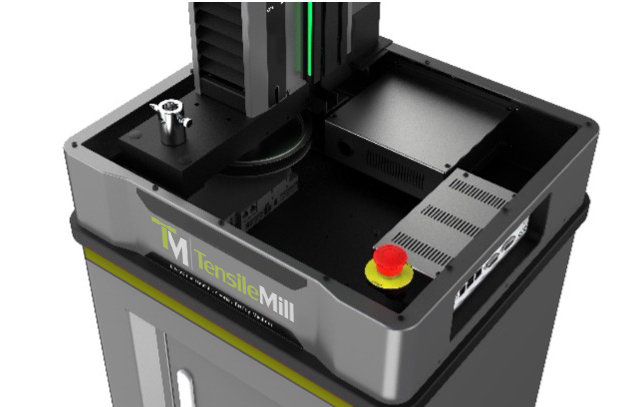
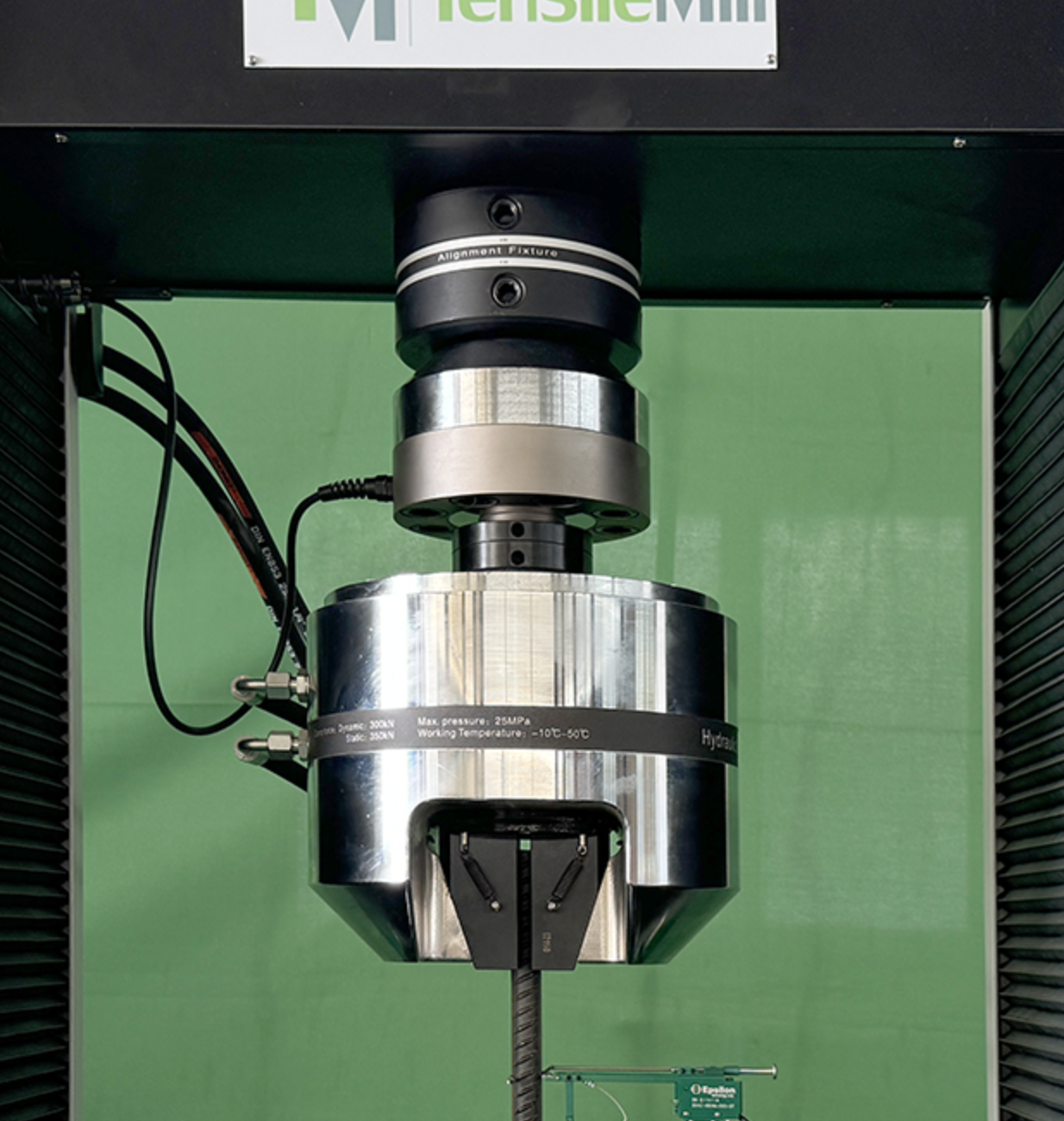
 - frame at 4m30s.jpg)
 - frame at 5m8s.jpg)
 - frame at 5m39s.jpg)
 - frame at 8m28s.jpg)
 - frame at 9m8s.jpg)
 - frame at 9m59s.jpg)