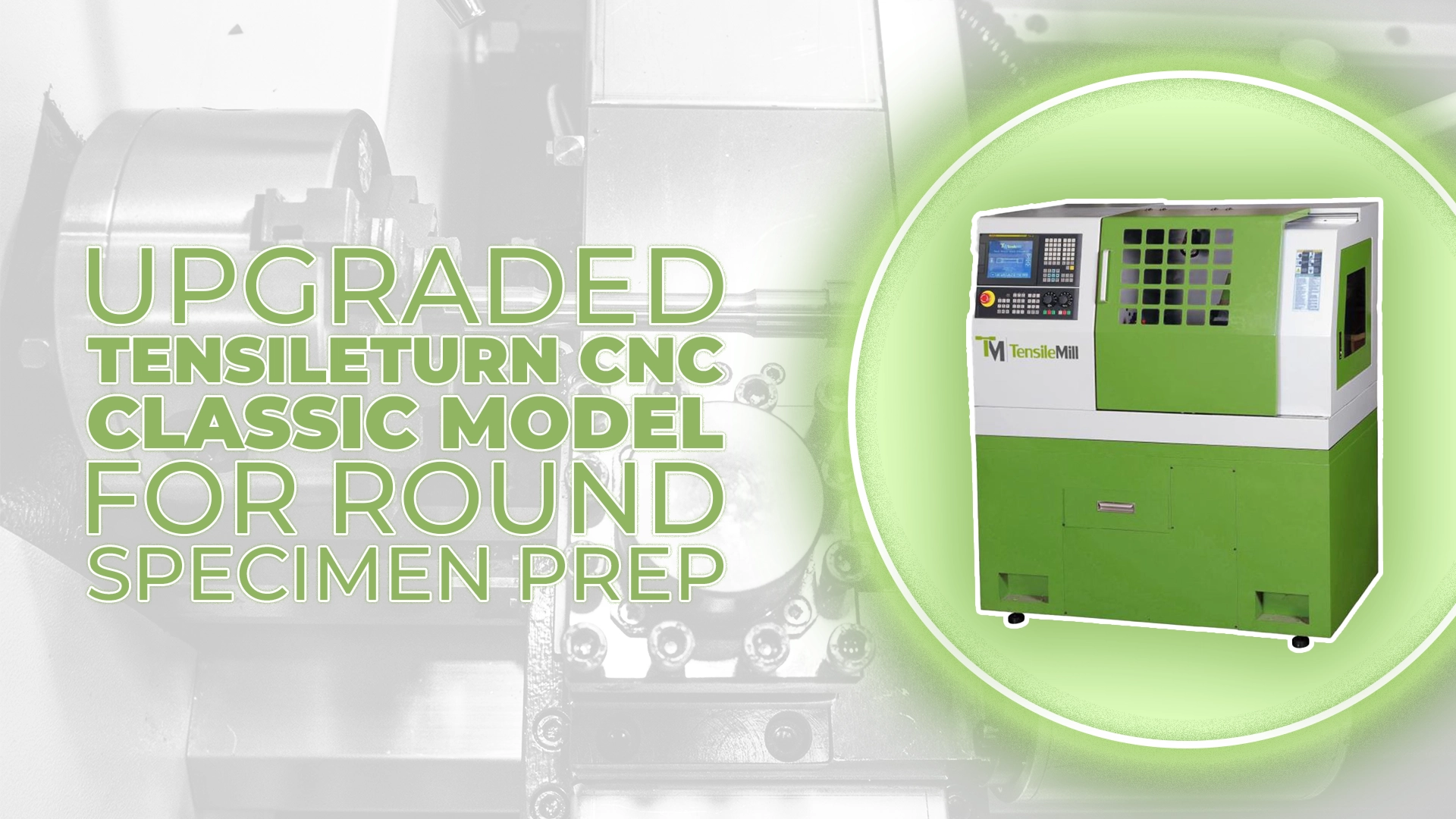
Is specimen preparation slowing down your testing process? For many labs and QA teams, waiting on traditional machining centers creates unnecessary delays. That’s why we’re introducing the upgraded TensileTurn CNC – Classic Upgrade, a compact CNC lathe engineered for faster, more reliable round specimen preparation.
This new version brings reinforced mechanics, a simplified controller with updated software, and greater efficiency for global standards. From aluminum to hardened steels and superalloys, the Classic Upgrade delivers consistent results with minimal training. Operators can be ready in hours, specimens in minutes.
In this article, we’ll take a closer look at what has been upgraded, why it matters, and how the TensileTurn CNC Classic Upgrade helps testing labs achieve accurate results faster.
What’s New in Classic Upgrade?
The Classic Upgrade introduces a series of meaningful enhancements that set it apart from previous versions of the TensileTurn CNC. At the center of these improvements is the new 15” touchscreen controller, powered by the updated TensileSoft™. Operators benefit from faster navigation, simplified menus, and a wider library of ASTM, ISO, and DIN standards. Whether selecting a preloaded template or entering custom dimensions, the interface makes setup quicker and more intuitive than ever.
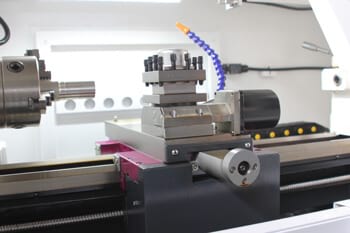
On the mechanical side, the Classic Upgrade delivers a stronger and more reliable performance. A 2.2 kW heavy-duty motor ensures consistent power for machining, even with harder alloys. The system can now handle specimens up to 1.5” (45 mm) in thickness and materials with hardness values up to 55 HRC, making it an ideal tool for labs working with steels, superalloys, and other demanding materials. For higher throughput, the triple clamping fixture allows operators to prepare up to three stacked specimens at once, reducing turnaround time without compromising accuracy.
The upgrade also improves overall usability. Enhanced vibration control and optimized motion deliver a smoother surface finish and better repeatability from specimen to specimen. Combined with its compact footprint, the Classic Upgrade fits seamlessly into laboratories where space is limited but precision is non-negotiable.
What is TensileTurn CNC and Why Does It Matter?
The TensileTurn CNC is a specialized CNC lathe developed specifically for the preparation of round tensile specimens. Unlike traditional machining centers that are designed for broad applications, this system is purpose-built to meet the strict requirements of material testing environments.
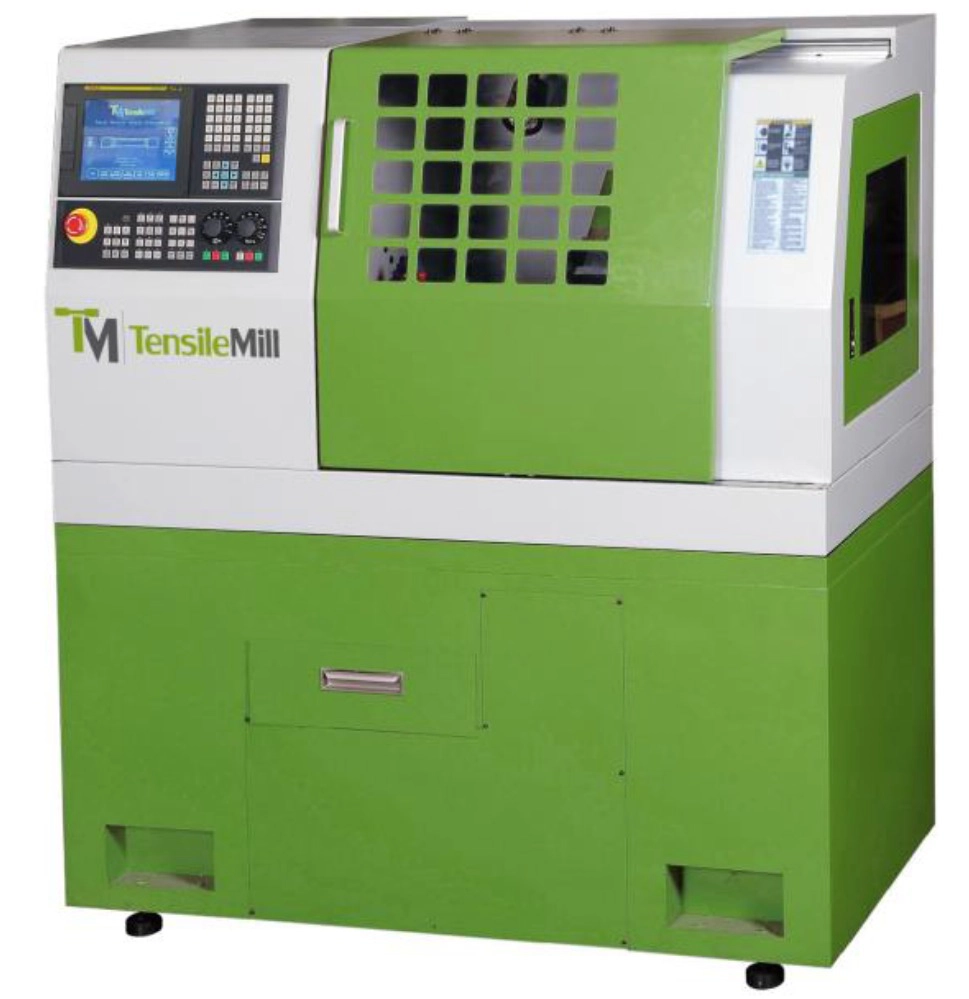
Versatility is one of its defining strengths. The machine is capable of producing standard round specimens, sub-size samples, threaded ends, button-head tensile bars, fatigue specimens, and even impact samples. This wide range of capabilities allows testing facilities to cover multiple standards and test types using a single, compact system.
The Classic Upgrade also expands the range of materials that can be processed with confidence. From lightweight aluminum and magnesium to copper alloys, structural and tool steels, and even nickel-based superalloys such as Inconel, the system can handle materials up to 55 HRC hardness. This flexibility allows that both routine and advanced testing programs can be supported without compromise.
For engineers, the TensileTurn CNC guarantees compliance with all needed standards. For QA managers, it guarantees that specimens are prepared with repeatable accuracy, providing the reliability needed for trustworthy test results. And for production and independent laboratories, it removes the dependency on external machine shops, cutting lead times and reducing costs.
How TensileTurn CNC Simplifies Laboratory Workflows
One of the biggest advantages of the Classic Upgrade is how it streamlines the entire specimen preparation process for laboratories. With its intuitive software and touchscreen controller, even operators with no prior CNC background can become proficient in just a few hours. The learning curve is short, which means labs can quickly bring new staff up to speed without long training sessions or dependence on specialized machinists.
The Classic Upgrade also delivers measurable time savings. Instead of waiting days for machining centers or outsourcing specimen preparation, operators can have standard-compliant specimens ready in minutes. This speed not only reduces delays but also allows labs to keep up with growing testing demands without additional equipment or personnel.
Workflow efficiency is further improved by features like the triple clamping fixture, which makes it possible to process multiple specimens simultaneously. By removing common bottlenecks, labs achieve smoother operations, faster turnaround, and more consistent daily output.
Equally important is the machine’s reliability. Every specimen is prepared with high repeatability, minimizing variability and ensuring accurate testing results. This consistency means engineers and QA managers can rely on their data with confidence, knowing that sample preparation will not be the weak link in their workflow.
Technical Features and Specifications
Behind the user-friendly interface of the Classic Upgrade lies a set of robust technical features designed to meet the demanding requirements of modern testing labs. At its core, the system is powered by a FANUC-based controller with MACH4 compatibility, offering advanced programming flexibility. With 64 GB of storage, support for macros, and advanced interpolation functions, operators have both the simplicity of preloaded standards and the depth of professional CNC capabilities. Regular software updates are included, ensuring the system stays current over time.
The motor and spindle assembly provide reliable performance across a wide range of materials. The 2.2 kW heavy-duty motor drives a spindle capable of speeds up to 4000 rpm, with an MT4 taper and a 26 mm bore for stable handling of different stock sizes. Combined with optimized motion control, this setup delivers the precision required for repeatable tensile specimens.
When it comes to travel and accuracy, the system supports an X-axis of 180 mm and a Z-axis of 465 mm, with rapid traverse speeds reaching 8000 mm/min. Accuracy is a defining strength, with position tolerances of X ±0.002” and Z ±0.001”, and repeatability of ±0.0001”, ensuring consistent, high-quality results across every sample.
For fixturing, the Classic Upgrade comes equipped with a 3-jaw universal chuck, a tailstock center, a 4-position electric tool changer, and a triple clamping fixture for higher throughput. A 25 L coolant tank supports smooth operation and extended tool life. The system accommodates specimens up to 16” in length and 2” in diameter, covering the majority of standard testing needs.
Despite its capabilities, the machine maintains a compact footprint of 62.5” × 27.75” × 59.65” (1590 × 705 × 1515 mm) and a net weight of around 1873 lb (850 kg). It runs on 220 V single-phase power with pneumatic connection requirements.
A Complete Solution for Modern Testing Labs
The upgraded TensileTurn CNC – Classic Upgrade is more than just an update. It is a comprehensive solution built for today’s material testing environments. Compact in size yet powerful in performance, it provides engineers, QA managers, and labs with the ability to prepare specimens faster and with greater consistency.
Accuracy and repeatability are at the core of the Classic Upgrade. It produces specimens that meet international standards while handling a full spectrum of materials, from aluminum and magnesium to hardened steels and superalloys. With its intuitive software and upgraded controller, operators can achieve reliable results in hours, not weeks.
For laboratories, the benefits are clear: minimized downtime, reduced reliance on external machining, and higher throughput. The TensileTurn CNC Classic Upgrade streamlines workflows, giving teams confidence in every prepared specimen.
Contact us directly or request a quote to learn how the TensileTurn CNC Classic Upgrade can support your testing needs. Share your specimen requirements, and our team will configure the right solution for your lab.