
CNC in a test lab is not a “nice to have.” It becomes a real staffing and risk question. Lab managers need output and repeatability, but they may not have dedicated machinists, and asking a technician to “also run CNC” can feel risky. New operators worry about crashes, scrapping coupons, and producing specimens that look acceptable but generate questionable results.
That concern is justified. In tensile testing, the result is only as credible as the specimen’s geometry and surface integrity, and ASTM E8/E8M explicitly warns that improperly prepared specimens are often the reason for incorrect or unsatisfactory results.
This article explains what makes general CNC genuinely hard without training, what becomes easier when the job is standardized specimen preparation, and what still must be controlled to produce repeatable, defensible tensile specimens.
Why General-Purpose CNC Is Hard Without Training
General-purpose CNC is difficult for beginners because correct results depend on multiple systems working together. It is not only about running a program. It is about defining where the part is, holding it consistently, cutting it with stable conditions, verifying motion safely, and measuring the output to tolerance.
First, CNC machining depends on coordinate systems and offsets. A machine cannot cut correctly without a defined origin and the correct work and tool offsets. For new operators, the learning cliff is understanding how the work offset represents the physical location of the stock, and why tool length offsets directly control Z and crash risk.
Second, setup and workholding discipline often determines accuracy more than the machine itself. Small errors like inconsistent clamping, slight angular misalignment, or incorrect datuming can change dimensions and surface finish, which is especially problematic when the workpiece has a critical functional region.
Third, tooling and process adjustments still matter even with a proven program. Operators must recognize chatter, poor finish, tool wear, and conditions that indicate the process should be stopped. In a lab context, that matters because a surface defect is not only a cosmetic issue. It can become a data quality issue.
Fourth, safe verification is a learned behavior. Beginners do not automatically develop a verification mindset. Without dry runs, safe clearances, and controlled first runs, crash risk increases sharply. In practice, the hardest part is not pressing Cycle Start. It is verification and setup discipline.
Fifth, measurement and tolerances are core responsibilities, not optional add-ons. General CNC roles require aligning tools and workpieces and verifying dimensions and tolerances with precision measurement. In a testing lab, metrology is also what makes the work defensible, because without consistent measurement you cannot prove compliance or detect drift.
Sixth, safety behaviors are non-negotiable. CNC milling and turning involve rotating cutters, pinch points, and flying chips. Machine guarding and safe operating practices are part of competency, not something that can be deferred until later.
Seventh, programming complexity often implies CAM expectations. For non-trivial geometry and operations, CAM becomes the practical standard, and that is a cognitive load many labs do not plan for when the primary mission is test throughput and traceability.
Finally, broad CNC competency takes time. Operators can become productive with structured training and proven workflows, but it is not realistic to imply “instant mastery” in general-purpose machining.
How Specimen Preparation CNC Is Different (And What Stays Demanding)
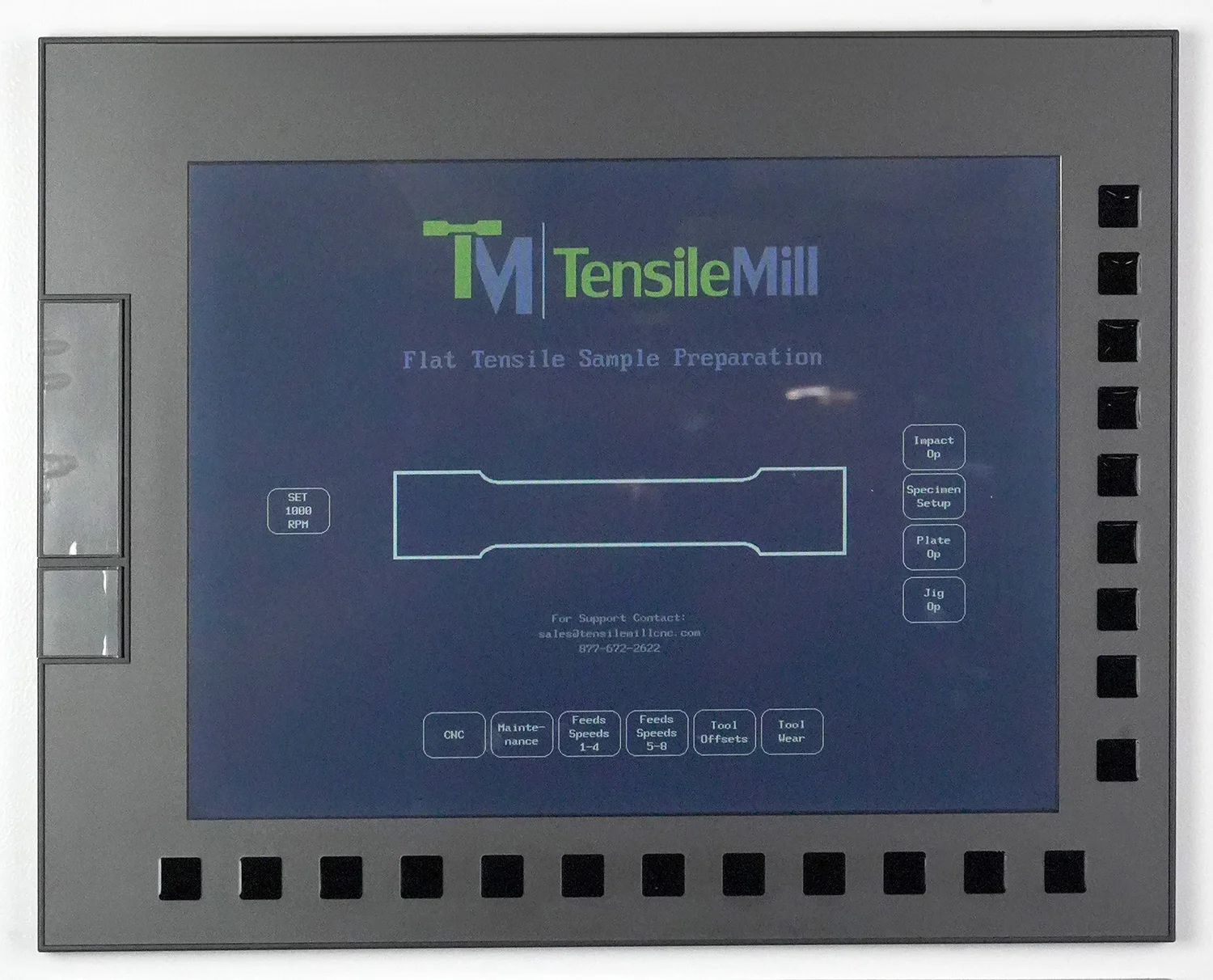
Specimen preparation is machining, but it is a special case. Unlike general job-shop work where part geometry and setups can change constantly, tensile specimen prep is built around a small number of standardized shapes. Most labs repeatedly make the same families of specimens, such as flat “dogbone” and round specimens, which naturally supports a more template-driven workflow. In that environment, the operator’s primary job shifts away from inventing toolpaths and toward executing a controlled process consistently. In many CNC workplaces, that separation is normal: programming is handled up front, while operators run proven programs and focus on correct setup, verification, and monitoring.
What does not become easy is the requirement for specimen integrity and repeatability. In specimen preparation, small defects can become measurement bias or test scatter. Tensile standards make it clear that the reduced section must be free of damaging conditions, and that surface condition and uniformity matter because they can change results and increase variability. The practical takeaway is straightforward. Specimen-prep CNC can be easier to operate than general-purpose CNC because the geometry and workflow are narrower, but it is more demanding in outcome requirements because the lab must deliver consistent geometry and surface integrity, not just a part that “looks fine.”
A useful way to frame the difference is this: general-purpose CNC is difficult because it must handle high variability in parts, setups, tools, and programs; specimen-prep CNC is difficult in a different way, because it must produce highly consistent specimens where small defects can distort test outcomes.
What Skills A Lab Operator Actually Needs
A lab does not need every operator to become a CAM programmer to produce defensible tensile specimens. It does need a compact set of skills that combines safety, setup discipline, verification habits, and inspection. The goal is consistent execution of a controlled process, not improvisation.
Required Skills
First, safety fundamentals for rotating machinery are non-negotiable. Operators must understand point-of-operation hazards, guarding expectations, and safe behaviors such as stopping the spindle before reaching in or measuring, and handling chips safely.
Second, operators must be able to run proven programs with correct setup. A proven program does not compensate for an incorrect setup. The operator must align workholding, establish the correct datum for the fixture, and follow a consistent setup route.
Third, coordinate system basics are required. Operators do not need advanced theory, but they must understand origin, axis directions, what a work offset represents physically, and how the correct offset is selected and verified in your lab’s workflow.
Fourth, basic tool handling is required. Operators must identify tools correctly, maintain tool length integrity, and follow a simple rule: any tool change requires a check before cutting production coupons.
Fifth, verification habits prevent crashes and scrap. Operators should use a dry run mindset, safe start procedures, and controlled first runs, along with clearance checks and awareness of travel limits.
Sixth, precision measurement discipline is essential. Operators must perform consistent checks of critical dimensions in the gauge section, using a repeatable method and consistent measurement points. They should also understand why cross-sectional area matters, because stress calculations depend on it.
Seventh, surface integrity awareness is required for valid test data. Operators must recognize burrs, chatter marks, gouges, rough edges, and overheating indicators in the reduced section, and understand that surface condition is not cosmetic in mechanical testing.
Eighth, documentation and a controlled-change mindset are part of defensible lab work. Tooling changes, fixture changes, and route revisions should be recorded so drift can be detected and results can be defended during investigations or audits.
Helpful, But Not Always Required
Full CAM programming is not required for many template-driven specimen workflows, but it is valuable for custom geometries and process optimization. Deep manual G-code writing and advanced multi-axis machining knowledge are also helpful for troubleshooting and non-standard work, but are not prerequisites for day-to-day operation in a standardized specimen preparation process.
Common Beginner Mistakes And How To Avoid Them
Most issues come from setup discipline, verification habits, and uncontrolled finishing that changes geometry or surface condition in the gauge section. Use the list below as a practical checklist for training and day-to-day work.
- Wrong Work Offset Selected: The machine cuts in the wrong location because the wrong offset is active, which can cause scrap or a collision. Reduce risk by standardizing one offset per fixture, requiring an offset check before every run, and doing a short dry run above the stock on first runs.
- Wrong Tool Or Wrong Tool Length Offset: A correct program still fails if the wrong tool is loaded or tool length data does not match the tool in the spindle. Control this with a locked tool list, consistent tool labeling, and a quick tool identity and length check after any tool change.
- Misaligned Fixture Or Inconsistent Clamping: Small alignment or clamping differences can shift dimensions and surface finish, especially in the gauge section. Standardize fixturing and datuming, use a consistent clamping method, and require a first-article inspection any time the setup is touched.
- Chatter Or Grooves In The Reduced Section: Chatter leaves surface damage that can increase scatter and trigger early fracture. If chatter appears, stop and correct the cause rather than finishing the run. Conservative first-run parameters, sharp tools, and simple wear limits prevent most chatter-driven defects.
- Burrs Or Rough Edges Left In The Gauge Section: Burrs act as stress concentrators and can distort elongation and fracture behavior. Use one approved deburr method that does not change cross-sectional area, add a quick visual check before testing, and re-measure if any finishing touches the gauge section.
- Uncontrolled Hand Finishing On Flat Specimens: Ad hoc sanding or heavy edge breaks can remove material in the reduced section and bias stress calculations. Limit finishing to controlled, documented steps and re-measure gauge width and thickness after any finishing.
- Overheating During Machining: Excess heat can alter near-surface condition and increase variability. Use an appropriate cooling approach, conservative passes when needed, and clear stop criteria if heat marks or discoloration appear in the reduced section.
- Cold Work Or Shear Burrs From Blanking Not Removed: Blanked or punched coupons can carry cold-worked layers and shear burrs that affect results. Define a mandatory cleanup machining step before final specimen preparation so the reduced section is created from controlled material.
- Recording Nominal Instead Of Actual Gauge Dimensions: Tensile stress depends on cross-sectional area, so nominal dimensions can quietly create bias. Require actual gauge measurements, standardize the measurement points and method, and increase checks after any process change until stability is confirmed.
- Gauge Marks Too Deep Or Too Sharp: Overly aggressive gauge marking can create a notch effect and shift fracture location. Standardize the marking method and treat repeated fracture at marks as a red flag that triggers immediate correction and verification.
How To Train Someone In 1–2 Days
In most labs, training time is limited. A practical 1–2 day plan should prioritize safety, repeatable setup, and inspection gates, so a new operator can produce acceptable specimens under supervision without introducing avoidable variability.
Day 0.5–1: Safety And Readiness Gate
Begin with non-negotiable safety behaviors for rotating machinery. Confirm guarding awareness, safe chip handling, and the habit of stopping the spindle before reaching in or measuring. Make sure the operator knows emergency stop, safe start, and what “normal” machine behavior looks like. Then walk through the workflow at a high level, focusing on what the machine will do and what the operator must verify on every run.
Day 1: Supervised Setup And Verification
Teach a consistent setup routine that mirrors real operator duties. This includes workholding alignment, tool assembly and setting, verifying the correct work offset and tool data, and performing a dry run before cutting. Use a short checklist for verification so the operator learns a repeatable habit, not a one-time demonstration. Finish the day with a controlled first test cut and an inspection of the output.
Day 1–2: First Acceptable Specimen Gate
Define “acceptable” using standard-driven expectations. The specimen must meet geometry requirements, and the reduced section must be free of prohibited defects such as burrs, chatter marks, grooves, or other surface damage that can affect results. Build a simple inspection gate: measure critical gauge dimensions, visually inspect the reduced section, and record the results for traceability.
Day 2: Repeatability And Drift Awareness
Do not stop at one good specimen. Require a short run of multiple specimens that all pass the same checks. Introduce drift thinking early, tool wear, fixture changes, and operator technique can shift dimensions and surface condition. Set a simple escalation rule: if results begin to scatter, start by inspecting specimen condition and checking for preparation drift before blaming the material or the test frame.
Add On: Validity Mindset
Treat specimen preparation as part of the “valid results” chain. Keep basic records and checks consistent so trends are detectable over time, which supports audit defensibility and reduces repeat investigations.
Explore CNC Specimen Preparation Solutions
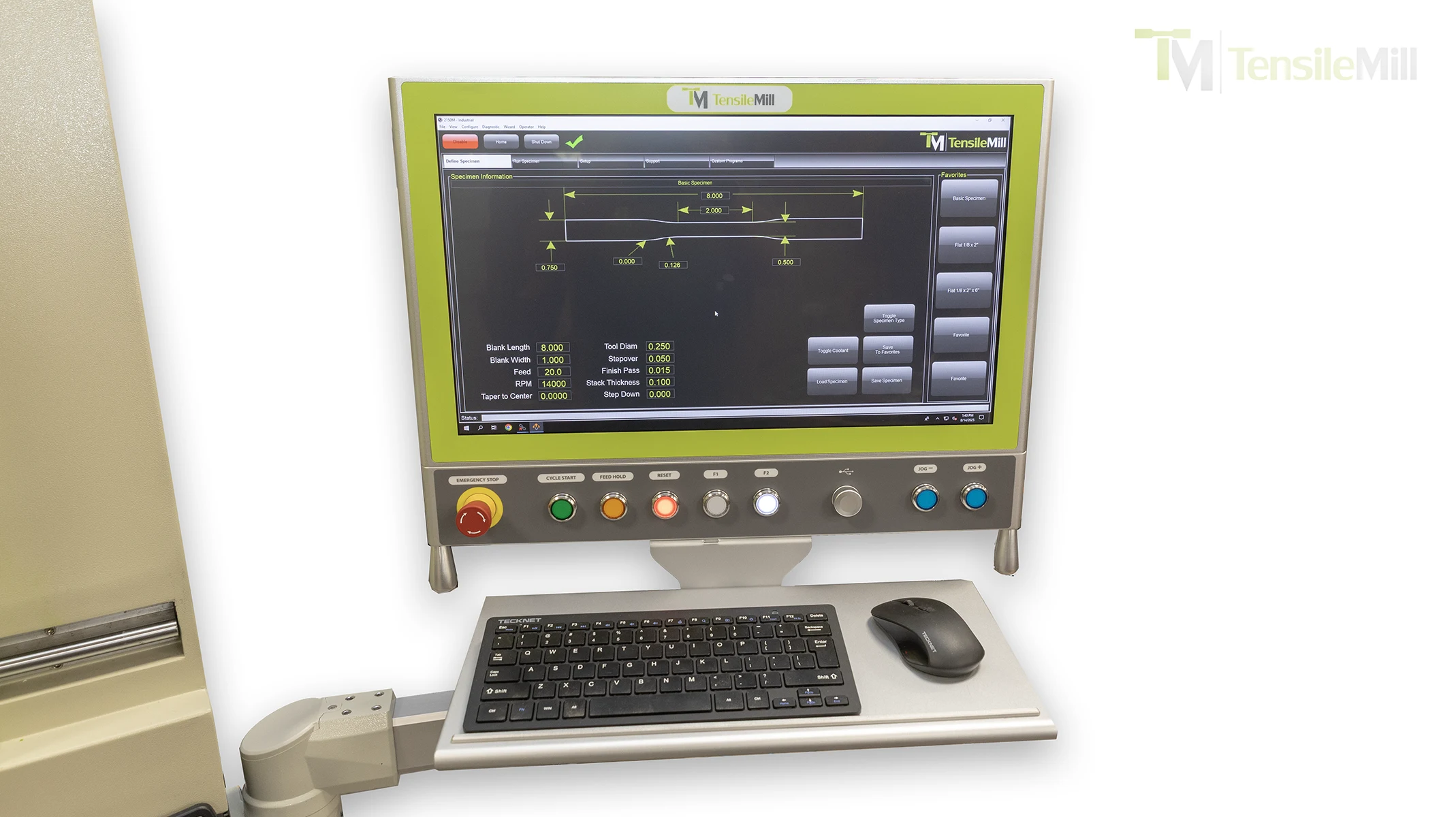
We see this challenge in labs every day. Starting CNC work without a machining background is not just about learning a control, it is about producing specimens that are consistent, repeatable, and defensible. That is why we build and supply CNC equipment for tensile and impact specimen preparation. Our systems are designed around standardized specimen workflows, with operator-friendly software and a setup process that helps reduce common errors, whether the operator is experienced or new to CNC specimen prep.
If you are expanding your lab, upgrading equipment, or replacing an older preparation process, you can review our CNC specimen preparation solutions on our product page. It lists categories for flat and round tensile specimens, as well as impact specimen preparation, so you can quickly identify options that match your standards, materials, and throughput.
Build A Repeatable Specimen Preparation Workflow
Running CNC without prior machining experience is possible in a lab environment, but only when the work is treated as a controlled process rather than a shortcut. General-purpose CNC is difficult because setup, offsets, verification, measurement, and safety must all be correct at the same time. Specimen preparation can be more approachable because the geometry is standardized and workflows can be template-driven, but the outcome requirements are stricter, because small defects in the reduced section can distort tensile results and create repeatability problems.
The most reliable path is to standardize how work offsets and tools are managed, lock down fixturing and setup routines, and add inspection gates that confirm geometry and surface integrity before testing. When results begin to scatter, the first response should be to check specimen condition and preparation drift, not assume the material or test frame is at fault. With disciplined onboarding and simple controls, labs can reduce crashes, scrap, and questionable data while building operator confidence over time.